I wanted to run through a list of the top ten books I use/have used to learn to write. I have no formal training to write, never took a creative writing class, didn’t even take my comp classes in college (exempt by ACT score). I took the basic English classes in high school. A lot of what I know came from reading fiction, but I have used a fair number of books for writers to hone my craft and a lot of trial and error. So here they are in roughly the order they proved helpful (1 being helpful when I was a beginner, 10 being helpful today).
How to Write Science Fiction & Fantasy (Card): This really helps put the genre in perspective. I like to reread this one for inspiration, but it was priceless when I got started. Anything by Card is fantastic. (Need a good fiction read with great characters? Try Ender’s Game.)
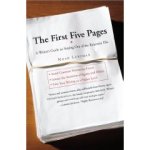
Get through the slush pile.The First Five Pages (Lukeman): So many of my stories had trouble getting started. This book helped me figure out what to look for and how to fix it. Lukeman’s follow-up book, The Plot Thickens, was far less useful to me, more a guide on how to build a story from the ground up. It’s got its place, but First Five is an excellent guide to getting editors to read the story rather than skim and reject.
The 38 Most Common Fiction Writing Mistakes (Bickham): I confess, when I first read this book, my stories were guilty of about ten. It’s a good guide for training your eye what to look for when revising. I still like to flip through the list every few months just to remind myself what to look for. You don’t have to avoid every mistake, you just need to know when you break a rule.
Harbrace College Handbook (Hodges): This is the collegiate bible for grammar and punctuation usage. It doesn’t matter much what year your Harbrace was written since rules in fiction writing aren’t set in stone. Again, it’s nice to know what convention is (or was) if you intend to break it.
Find the best word.
Flip Dictionary (Kipfer): It serves basically the same function as a Thesaurus but includes a lot of phrases and/or concepts related to a word. For instance, you want to know what you call the referee in a baseball game. You can look up either “referee” or “baseball” and get to “umpire”. It’s also handy for finding words related to words related to something. The “Flip” in the title refers more to how you’ll flip through the pages than having the definitions and words flipped around (although that description works, too).
Self Editing for Fiction Writers (Browne & King): This is similar to 38…Mistakes but goes a lot deeper into the parts of the story, looking at larger pieces and more subtle adjustments like tone and voice. The sections on dialogue are quite good, as is most of the advice in the book. I reread this recently to fish out some of the concepts that might still be eluding me.
Creating Short Fiction (Knight): Damon Knight knew what he was doing. His knowledge has guided many writers to professionalism. Not me yet, but it’s got me going a good direction. This is an especially good book for dealing with writer’s block or with stories that just won’t come out right (consult Fred). A lot of the information in this book is also in Kate Wilhelm’s Storyteller, which focusesa lot on the Clarion workshop, too.
Writing the Breakout Novel (Maass): Eventually I had to ask myself why my stuff isn’t selling when I see a lot of junk out there that does. I came up with two reasons: connections and X-factor. I have found no book for establishing connections, but this book tries to take some of the mystery out of the X-factor that can make even schlock sell. Maass, a big time literary agent, makes that X-factor something you can plan and work toward. It’s still hard to know if I’ve got it, but it gets you moving that way. (I think I’m around the V-factor right now.)
Elements of Writing Fiction Series (Card, Kress, Noble, Bickham, and others): I cheated a bit here. I had trouble selecting one book from this series, so I put the whole thing. I found Character and Viewpoint very useful early on while Beginnings, Middles, and Ends was a bit more advanced and Plotfell pretty well in the middle. Each book in the series was good, though Description was a little to poetic for my taste.
Paragons (Wilson, ed.): This is a book of short stories by masters, each story followed by an essay by the author regarding how they achieved whatever the story was renowned for (characters, plot, tone, etc.) I have had this book a long time and have not yet begun to use it effectively. It was published as a masterclass to follow Clarion. There’s a lot of skill and subtlety outlined in this book and I intend to read through it again as soon as I remember to bring it home from school.
There are a lot of other books I have used. Many of them repeat the same information that the above books spell out better. Some just plain sucked. It is worth noting that I have never used or read The Elements of Style (Strunk and White) which is a renowned tool for all writers. I think it does a lot of what I use Harbrace for. The bottom line for me is whichever books are readable and offer advice that improves your writing (directly or indirectly) is a good book. I hope this list might help some beginners (and non-beginners) find resources improve their craft and might inspire some discussion on other books I might have missed.
I just received an email from Andromeda Spaceways Inflight Magazine (a respected semi-pro magazine in Australia) regarding “Leech Run”. It took them an impressively swift five days to reject it. Most zines don’t even see a submission for a couple weeks. ASIM does good work and has a fairly transparent review process with three rounds of reading. I made it past level one but got axed in level two. American Idol fans, that’s like going home the first night of Hollywood week.
Now I need to find a new market for “Leech Run”. I’m afraid I exhausted some good candidates prior to a major rewrite. I probably could send it back to Fantasy & Science Fiction, but it is considered bad form to send a rewrite to an editor who did not request one. So I may try The Leading Edge or…I don’t know, someone else. There is a bit of a limited market for short space opera. Novels? They seem to fly off the shelves.
Today I attended a teacher inservice about poverty, mostly an emphasis on differences between middle-class and lower-class students (and parents’) perceptions of and responses to things. There were some good insights there that I would love to use in a story, particularly how money is spent. I’m already forgetting a lot of it and don’t have a story or character yet. I guess I’m waiting for another idea that can piggyback with this one to make a story.
I’ve worked the last couple days on a piece for middle-grades kids (not to be confused with middle-class kids…I mean 5th to 8th graders). It needs some serious editing, but I got the first draft onto the screen in record time. Now to hack away 20-30% of the length so I can expose the real story and maybe then add a little back for aesthetics.
Hmm, it’s late and I’m yawning up a storm. I’ll ramble more when I have more to say on more sleep. Thanks for reading.

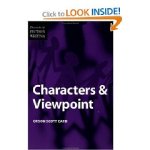 Elements of Writing Fiction Series (Card, Kress, Noble, Bickham, and others): I cheated a bit here. I had trouble selecting one book from this series, so I put the whole thing. I found Character and Viewpoint very useful early on while Beginnings, Middles, and Ends was a bit more advanced and Plot fell pretty well in the middle. Each book in the series was good, though Description was a little to poetic for my taste.
 Scott W. Baker .net