Critters online workshop

A long time ago (six years?), I went looking for a way to improve my writing. I looked around online (where else does one look these days?) and discovered the existence of workshops. This was where I discovered Clarion and its ilk, but I wasn’t ready for that and couldn’t begin to afford it. Fortunately I also I discovered Critters.org.

Critters is the world’s largest critique group (to my knowledge). It’s definitely the most open. Anyone can join and all stories can be critiqued as long as you critique a minimum average number of other people’s manuscripts — about three a month. I must confess, the first time I had a story critiqued by the group, it was politely demolished. Gradually the comments grew more positive, and now I find most of them say more good than bad.

Oh there’s always a few that carry an air of hostility, as if nothing written by anyone but them will ever be worth publishing. And there are others that just don’t prefer a specific story. But by and large, Critters leads me to believe my writing has come a long way. But what good are atta-boy comments to me?

Critters does a great job of letting me know if a story is confusing or if the pace is too slow (athough some people want every story to be a Jason Statham movie), or catching spelling and/or grammar mistakes. The members spot POV problems well, devour opportunities to say “show-don’t-tell”, and never miss a chance to question dialogue mechanics. These can be helpful because authors frequently are blind to these issues in their own work. I still run almost every story through the queue at Critters for this kind of advice plus the infrequent gem of insight someone drops in my lap.

What Critters can’t tell me is whether a story is ready to sell. Many Critters members have sold stories, but do they know what made their work saleable and what makes their other stories rejection magnets? I sure don’t. I like to think it’s a difference in taste, but I doubt it. I am confident that I am making significant errors that are fixable but invisible, often even invisible to the rejecting editor. Critters is yet to help me with those problems.

It’s not that I haven’t received comments that could push me in the right direction. I probably have. But which ones? I like to think (naively) that comments I offer to other writers are in the top quartile of significance (everyone knows they are the smartest, right?), but how is a writer to know how brilliant my comments are? Or are they rubbish? If ten people tell me that a speech pattern is hard to understand, I will probably change it. If three tell me it’s hard to understand, three rave about how perfect it is, another points out the misspellings the dialect created (without mentioning dialect at all), and two don’t even mention it, what is a boy to do?

This blog entry is not designed to disrespect Critters. Far from it, I advocate Critters to any writer, beginners to pros. What I want to do is make some suggestions on how to use it as a writer. Some day, I will assemble my thoughts on how to approach Critters as a critiquer (arguably a more valuable angle).

  1. Investigate the accuracy of line edits. Do you really need a semicolon there, or will your original comma be sufficient? What is the specific definition of the word they recommended? These people may be English professors or burger flippers and it’s important to remember that fiction has room for the styles of either. Characters end sentences with prepositions and should. Even narrators should. “Correct” may not be the best way to write. After all, “Woe is I,” is the grammatically correct sentence. But the burger-flipper may not be the guy to listen to, either. Sentence structures should be varied while still being clear. Some people want every sentence to follow the same build, as if they will be expected to diagram them and want to know where each part lies. Look it up before you change it.
  2. Never take a critter’s word as law. One person may say something that makes you slap your head and say “why didn’t I see that?” Don’t change anything yet. Consider everyone’s comments first. A problem in the story’s middle may not be caused by the writing in the middle. In my experience, Critters tend to notice different problems surrounding the same part of a story. They all suggest different fixes. Often those suggestions will fix one problem but not the others. Look for the fix that will take care of everything. Maybe that means merging two characters into one (seldom suggested to me despite the usefulness of the exercise) or merging two scenes or sometimes as simple as changing a few words. This is a vague comment but is the key to gleaning useful information from a cluster of critiques.
  3. How is the critiquer’s writing? A few typos aren’t a big deal, but if it’s tough to decipher what a critique is saying, do you want to take its advice on how to clarify your story?
  4. Sometimes the places that they “don’t know how to fix it” are the places that need the most attention. Think about it, an editor can request a rewrite with a shorter chase scene or with the flashback cut or a thousand words shorter. They can’t say “fix the part on page seven that seems not right for some reason”. I guess they could say that, but they won’t. Rewrites aren’t sales, but they are wanna-buys. If they like it but can’t put a finger on why they can’t buy it as-is, they’ll end up passing. So trust people who scratch their heads in places (in accordance with number two), they may be the most valuable comments you get.
  5. If someone is tactless, they probably don’t know what they are talking about. Critter’s policy is to use diplomatic language, expressing every thought as the critiquer’s opinion rather than hard fact. Some things will come across a little harsh (no one wants to read ten thousand IMOs), but you know when someone thinks they are God’s authority on publishing. If they were so smart, they wouldn’t be messing up the Critter’s policy. Still, you should read their comments. Almost every critique has value, if only to reinforce the comments of others.
  6. Don’t take it too seriously. Most of these people are far more focused on their own writing than they are on yours. Why should they like your story? You brought it to them to look for the flaws, they have nothing else invested in it. Editors at least want to like your story when they read it. Hey, I don’t like most of the stories I read on Critters. I only like about half of the ones I read in magazines. My opinion is worthless to you; my complaints and advice (combined with everyone else’s) can help you improve your story tremendously.

If you use it wisely, Critters can make your stories (and your writing in general) much better. It did mine. But it takes a lot more to make them good.

-Oso
Stupid People

By day, I teach high school math. I am consistently shocked by the stupidity I see on a daily basis. I am not saying that all our students are stupid or that any of them are stupid, but they sure do stupid things.

For instance, I had a student today turn around during a test and ask the kid behind him, “Is this the ones where we…” Not only did he do this during a test, he did it in my eye line. Then he had the nerve to be shocked when I called him down for cheating.

I didn’t give him the zero he deserved; I isolated him and will take off ten points. It’s easier to defend than a zero. Sad, isn’t it, that teachers have to defend their grading and disciplinary actions these days. It used to be that a teacher’s word was law.

I also find myself constrained by rules designed for students. For instance, students are not allowed to use cell phones during school hours, not allowed to have them turned on. Sound reasonable? But teachers are prohibited from using cell phones “in view of students”. I can’t whip my phone out to call a parent. Coaches can’t use them to verify the status of a game in bad weather. If my daughter’s babysitter calls to tell me something bad happened, I am expected to slink into a workroom before I answer, and I’ll be “talked to” about the simple fact that the phone rang at all.

See? Stupidity. It ain’t all from the kids.

For the record, I agree that teachers don’t need to be making dinner reservations or chatting up boyfriends during class time. But there used to be a line between what was acceptable for children and for adults. That line is blurred now, presumably out of respect for the feelings of the poor dears.

All right, I am ranting now. *deep breath* I just long for the day when teachers are considered professionals again, experts even. We went to college, we know our stuff. Why am I treated like a student and paid worse than a garbage collector?

-Oso

Treasures from the Book Cellar

I had a noon dentist appointment last week, so I took the whole day off from school. It left me with a lot of spare time that morning, something my two-year-old strives to eliminate from my days. But she was at the sitter this morning and I went out for some breakfast and to visit the local used bookstore.

The used bookstore is the only bookstore in the “city” I work in. There is a Books-A-Million in the next little city, about half an hour away and just as close to my house. I am a bibliophile (mild case, not life threatening) and can’t resist wondering among the orderly shelves and tables of a proper bookstore, doing much more looking than buying.

Then there’s the used bookstore. Tens of thousands of books on mish-mashed shelves, crammed together in only the vaguest resemblance of alphabetical order, sectioned wherever there was space for the category. It’s beautiful. This trip I wound up purchasing five books and four magazines, spending under fifteen bucks. No too shabby.

Primarily I was looking for books and stories from the instructors at this year’s Clarion and Clarion West, also keeping an eye out for other names of note. I stumbled across (the only way to find anything there) Kim Stanley Robinson’s Green Mars in trade paperback for two dollars. That’s right, two. It was in very good shape, after all, I was looking for stuff to read, not display. Alas, I had not yet read Red Mars and didn’t want to try to absorb things out of order. But Robinson is teaching in San Diego (Clarion west’s new home — no more Michigan) so I held on to it. I’m glad I did since I found Red mars in standard paperback in another group of shelves, $3.50.

Among the hardcover SF books I found an old library copy of Heinlein’s The Cat Who Walks Through Walls. Not renowned as his finest work, but I have heard the title pop up on occasion. Three quarters was all they asked for it. I just hope I can read it, the pages are brittle and falling out. If not, well I’m out the cost of a really bad cup of coffee. Heinlein is obviously not teaching any workshops this year, but he’s still Heinlein.

The most intriguing find was a book entitled Science Fiction: History, Science, Vision, copyrighted the year of my birth. It starts with a brief history of the genre in literature and a little from other mediums. Then it’s an overview of 1977 science, starting with the scientific method and touching on biology, astrophysics, etc. Next it looks into various areas sci-fi likes to visit that might not be quite so scientific: utopias, imaginary worlds, and the like. Finally it comments on ten representative novels. I have not read any more than the table of contents, but I am very curious about what the Oxford University Press had to say about these things over thirty years ago. I nothing else, there are story ideas hiding in these pages begging to be discovered.

The last book was one I actually sought out. My space opera story, “Leech Run,” just received honorable mention from Writers of the Future. A nice enough showing, but I wondered what winning stories looked like. So I sought out some WotF collections and found the book from 2005. I am currently reading one of the stories that won a quarter; I’m not terribly impressed yet. Maybe it has a strong ending.

My magazine purchases weren’t all that exciting. I sifted through a pile to find some recent issues of Analog, Asimov’s, and F&SF. It didn’t even occur to me to seek Clarion authors, but I still wound up with a story co-written by Rudy Rucker in an Asimov’s. I also lucked into a copy of Isaac Asimov’s classic story, “Nightfall” in an anniversary edition of the magazine he founded. It was a good haul on magazines I would love to be in but haven’t read in several years.

It is worth noting the overwhelming dominance of Star Trek novels at this store. Two full bookcases. I know some of them are well written, but I have no clue which ones. I am a fan of most of the different series, especially TNG, but I have never read a Trek novel. I may grab one next time if I can get an idea of a good one, but I’m a little weary at the thought of reading a book in such a thoroughly explored universe. I already know the characters for seven seasons and several movies. I just can’t get excited about reading stuff I am already full of.

This has not been a review of any of these books, really no more than an announcement of my purchase and the processes that led me to them. It was a good haul. I’ll need to wait another few months to let the store’s inventory change before returning. Fortunately, I think I have enough to read while I wait.

Writing Books

I wanted to run through a list of the top ten books I use/have used to learn to write. I have no formal training to write, never took a creative writing class, didn’t even take my comp classes in college (exempt by ACT score). I took the basic English classes in high school. A lot of what I know came from reading fiction, but I have used a fair number of books for writers to hone my craft and a lot of trial and error. So here they are in roughly the order they proved helpful (1 being helpful when I was a beginner, 10 being helpful today).

  1. How to Write Science Fiction & Fantasy (Card): This really helps put the genre in perspective.  I like to reread this one for inspiration, but it was priceless when I got started.  Anything by Card is fantastic.  (Need a good fiction read with great characters?  Try Ender’s Game.)
  2. Get through the slush pile.
    Get through the slush pile.
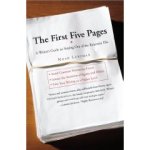
    The First Five Pages (Lukeman): So many of my stories had trouble getting started.  This book helped me figure out what to look for and how to fix it.  Lukeman’s follow-up book, The Plot Thickens, was far less useful to me, more a guide on how to build a story from the ground up.  It’s got its place, but First Five is an excellent guide to getting editors to read the story rather than skim and reject.
  3. The 38 Most Common Fiction Writing Mistakes (Bickham): I confess, when I first read this book, my stories were guilty of about ten.  It’s a good guide for training your eye what to look for when revising.  I still like to flip through the list every few months just to remind myself what to look for.  You don’t have to avoid every mistake, you just need to know when you break a rule.
  4. Harbrace College Handbook (Hodges): This is the collegiate bible for grammar and punctuation usage.  It doesn’t matter much what year your Harbrace was written since rules in fiction writing aren’t set in stone.  Again, it’s nice to know what convention is (or was) if you intend to break it.
  5. Find the best word.
    Find the best word.
  6. Flip Dictionary (Kipfer): It serves basically the same function as a Thesaurus but includes a lot of phrases and/or concepts related to a word.  For instance, you want to know what you call the referee in a baseball game.  You can look up either “referee” or “baseball” and get to “umpire”.  It’s also handy for finding words related to words related to something.  The “Flip” in the title refers more to how you’ll flip through the pages than having the definitions and words flipped around (although that description works, too).
  7. Self Editing for Fiction Writers (Browne & King): This is similar to 38…Mistakes but goes a lot deeper into the parts of the story, looking at larger pieces and more subtle adjustments like tone and voice.  The sections on dialogue are quite good, as is most of the advice in the book.  I reread this recently to fish out some of the concepts that might still be eluding me.
  8. Creating Short Fiction (Knight): Damon Knight knew what he was doing.  His knowledge has guided many writers to professionalism.  Not me yet, but it’s got me going a good direction.  This is an especially good book for dealing with writer’s block or with stories that just won’t come out right (consult Fred).  A lot of the information in this book is also in Kate Wilhelm’s Storyteller, which focusesa lot on the Clarion workshop, too.
  9. Writing the Breakout Novel (Maass): Eventually I had to ask myself why my stuff isn’t selling when I see a lot of junk out there that does.  I came up with two reasons: connections and X-factor.  I have found no book for establishing connections, but this book tries to take some of the mystery out of the X-factor that can make even schlock sell.  Maass, a big time literary agent, makes that X-factor something you can plan and work toward.  It’s still hard to know if I’ve got it, but it gets you moving that way.  (I think I’m around the V-factor right now.)
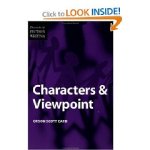
  10. charviewElements of Writing Fiction Series (Card, Kress, Noble, Bickham, and others): I cheated a bit here.  I had trouble selecting one book from this series, so I put the whole thing.  I found Character and Viewpoint very useful early on while Beginnings, Middles, and Ends was a bit more advanced and Plot fell pretty well in the middle.  Each book in the series was good, though Description was a little to poetic for my taste.
  11. Paragons (Wilson, ed.): This is a book of short stories by masters, each story followed by an essay by the author regarding how they achieved whatever the story was renowned for (characters, plot, tone, etc.)  I have had this book a long time and have not yet begun to use it effectively.  It was published as a masterclass to follow Clarion.  There’s a lot of skill and subtlety outlined in this book and I intend to read through it again as soon as I remember to bring it home from school.

There are a lot of other books I have used.  Many of them repeat the same information that the above books spell out better.  Some just plain sucked.  It is worth noting that I have never used or read The Elements of Style (Strunk and White) which is a renowned tool for all writers.  I think it does a lot of what I use Harbrace for.  The bottom line for me is whichever books are readable and offer advice that improves your writing (directly or indirectly) is a good book.  I hope this list might help some beginners (and non-beginners) find resources improve their craft and might inspire some discussion on other books I might have missed.

-Oso

Ouch.

I just received an email from Andromeda Spaceways Inflight Magazine (a respected semi-pro magazine in Australia) regarding “Leech Run”. It took them an impressively swift five days to reject it. Most zines don’t even see a submission for a couple weeks. ASIM does good work and has a fairly transparent review process with three rounds of reading. I made it past level one but got axed in level two. American Idol fans, that’s like going home the first night of Hollywood week.

Now I need to find a new market for “Leech Run”. I’m afraid I exhausted some good candidates prior to a major rewrite. I probably could send it back to Fantasy & Science Fiction, but it is considered bad form to send a rewrite to an editor who did not request one. So I may try The Leading Edge or…I don’t know, someone else. There is a bit of a limited market for short space opera. Novels? They seem to fly off the shelves.

Today I attended a teacher inservice about poverty, mostly an emphasis on differences between middle-class and lower-class students (and parents’) perceptions of and responses to things. There were some good insights there that I would love to use in a story, particularly how money is spent. I’m already forgetting a lot of it and don’t have a story or character yet. I guess I’m waiting for another idea that can piggyback with this one to make a story.

I’ve worked the last couple days on a piece for middle-grades kids (not to be confused with middle-class kids…I mean 5th to 8th graders). It needs some serious editing, but I got the first draft onto the screen in record time. Now to hack away 20-30% of the length so I can expose the real story and maybe then add a little back for aesthetics.

Hmm, it’s late and I’m yawning up a storm. I’ll ramble more when I have more to say on more sleep. Thanks for reading.

-Oso

Greetings to all my fans: past, present, and especially future.

…and then, against all odds, something crawled out of the primordial internet and became Oso’s Blog.

If you found your way here without knowing who I am, good for you.  I currently publish under the name Scott W. Baker.  That being my actual name, it seemed a good choice.  I am toying with the idea of publishing under a nom de plume, or maybe even a pen name, but as yet I am not convinced this would be wise.  For instance, how would the dozens of people who have read my previous stories connect my past works to my current and future works?  If I did adopt a pseudomymn, I have pretty well decided it should be Oso Baker.  It’s a nice combination between my real name and my internet identity.

I guess my first post here should explain the origins of “Oso Muerte” in their entirety.  As so many nerdy nicknames do, it started with a character in a role playing game.  I wanted something tough, but my friends decided the character class I had selected resembled a dead bear.  Being that my character was supposed to be South American, I named him “Dead Bear” in Spanish.  Rather I tried to — it came out Oso Muerte: “bear death”.  Anyway, the character was fun and resembled me in more ways than anyone cares to hear, so the nickname stuck to me, at least with that very specific clique.  Seeing as no one else was absurd enough to use such a name, it became my go-to username for anything online.  Try Googling it, see if anything other than me comes up.  You’ll get my Amazon profile, maybe my MySpace page, maybe a few pages in Spanish about endangered ursines.

Still, the name comes across too Spanish for a pen name, especially considering my considerable ignorance of Spanish or Hispanic cultures.

I have maintained a blog on MySpace for a short time, but that didn’t quite suit my needs.  So I am moving in here at WordPress, growing up and getting a place of my own in the http://www.  I may move those old blog posts over to catch people up on the dizzying pace of my writing career (currently composed mostly of waiting).  Until then, here’s a quick summary of what I’ve been up to:

CLARION!

Don’t get too excited, I am just in the application stage.  Actually I am past the application stage and into the clawing-my-eyes-out-while-I-wait-to-hear-something stage.  But currently my Clarion applications are the foremost issues in my daily writer-life.

For those who do not know, Clarion is THE workshop for budding speculative fiction writers.  It’s a six-week bootcamp taught by five professional writers and one editor, usually award winners and often workshop  graduates themselves.  All other big-time workshops are built off its model.  I have applied to both the American incarnations of Clarion: Clarion West and plain old Clarion (often called Clarion East despite its recent transplant to San Diego).  There are other workshops — Odyssey, Viable Paradise, Orson Scott Card’s Literary Boot Camp — but I can’t bring myself to take serious time away from my wife and two-year-old daughter unless I truly believed the workshop could kick start my career.  Not every Clarionite becomes a pro, but their track record is exceptional.

The story I submitted to Clarion West just earned an Honorable Mention from L. Ron Hubbard’s “Writers of the Future” contest.  A higher placing would have inspired more confidence, but HM tells me I did something right.  A simple rejection from the contest would have discouraged my hopes of attending Clarion.  Still, there are no guarantees until there are guarantees.

I submitted that same story (entitled “Leech Run”) to Clarion East as well as a more recent work (“Glow Baby”), which was inspired by my daughter’s night light.  Both stories were between five and six thousand words, though one was Firefly-esque space opera and the other is more SF invading modern life.  Both these stories are making the rounds through different markets, though I may let “Glow Baby” take a pass at the Writers of the Future contest, too.

As soon as I hear anything about either workshop, I’ll be sure to post the outcome here.  Well, maybe not right away.  First I will have to hyperventilate, tell my wife, dance around the room, call my mother, cry a little, and then I can post here.  Bad news will simply post without fanfare.

I am not basing my career on acceptance or rejection from Clarion (or CW).  I will write come workshop or high water.  But man, I could use the kick in the keyboard these workshops represent.

This blog will not be all about Clarion.  It may not all be about writing or SF, either.  It’s a blog and I’ll throw you whatever scurries though my odd little head.  Right now my head is full of Clarion.  (It has been accused of less savory fillings.)  Come back to see what other stuff I might say.

-Oso