
Often I hear of urban dwellers using commute time to do their reading: on a train, bus, or subway. I drive. There aren’t a lot of options here. But I still like to spend that time catching up on good books. Thank heavens for audio books. Let’s face it, listening to a book is not the same as reading it. It’s a close second, though, particularly an unabridged version. It can, however, reveal some of your favorite authors’ faults the same way that reading your own work out loud can reveal flaws in your stories.
I have listened to the first five Harry Potter books on tape or disc, though it’s been years. I wanted to reread them but couldn’t justify the time away from my perpetually growing reading list that I already neglect far too much. A coworker had the HP audios and I borrowed one. The performance by Jim Dale is awesome. His voices are great and his delivery is spot on for the wizarding world. I consider his performance the industry standard. If you haven’t heard him, get one of those books and listen. If I find other books he reads, I may get them just for his voice. Of course I haven’t gone looking…yet.
More recently I listened to K-PAX by Gene Brewer. If you’ve seen the movie, you got the gist of the story. There were differences, but the movie was well done, as was the book. The novel’s style lends itself well to audio performance. It was no Jim Dale, but it was good.
 At the same time I purchased K-PAX, I bought Michael Crichton’s Next. Both were in a discount bin at the local bookstore. I guess I’m about halfway through it. I’ve never really read Crichton. I hope his other books are better. Considering that every version of Next (hardcover, paperback, and audio) were marked way down, I assume it is a sub-par example of his work. It’s extra tough as an audiobook; I keep wanting to flip around to make sure I know which character he’s talking about. It took five of the thirteen or so discs to get to the main plot. I’ll keep this example in mind as I write my own novels.
I also bought a book off iTunes, intending to listen on my iPod but it found its home on my school computer. The book is Dune. Yes, I am a SF heretic that has never read Frank Herbert’s classic of classics. I have good reason. I had a college roommate who watched three different movies EVERY night as he fell asleep: Dune, Waterworld, or The Muppet Movie. Muppet nights always led to better dreams. What was more, I married a woman addicted to the David Lynch film. Just looking at the title sent images of Brad Dourif and Sting. It was a borderline phobia.
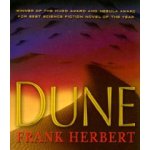
Anyway, the audiobook was a safer approach for me. The book is (obviously) much better than the film, though the movie does color many of my mental images. I’m glad I’m “reading” it this way. Numerous voices lend their talent to the presentation. I just absorb a chapter or two while I grade tests or homework during my planning period. It’s nice, relaxing, efficient.
I love audio performances. The new Amazon Kindle 2 reportedly has an automated “read aloud” option. Not the same. I don’t know that I could take more than a page of robo-speak. Reviews I have seen call the Kindle’s vocal technique “serviceable”. I’m looking for a voice that adds to the telling, not detracts. Still, as a writer (even one far from audio contracts), I am concerned what the auto-read will do to audiobook rights. Will licensing a book to Kindle reduce the value of the audio rights? Infringe upon previous rights? There is a fair amount of discussion out there already about this, most writers groups preferring Amazon include an option to block the audio feature. Sounds like n inexpensive solution to me, especially if it causes problems with the Kindle acquiring key authors. Maybe Oprah could get behind the writers’ initiative. Anyway, I love audiobooks and would hate to see anything inhibit their continued production.
-Oso

 Elements of Writing Fiction Series (Card, Kress, Noble, Bickham, and others): I cheated a bit here. I had trouble selecting one book from this series, so I put the whole thing. I found
  Scott W. Baker .net