I’ve been writing for about a quarter of a century. While the very first thing I wrote as a writer was a novel (a shameless Harry Potter ripoff that was never even close to publication), my successes have all come in the form of short stories. I’ve tried novels. I’ve outlined them, started them, restarted, started a different one, gone back to rewrite the first one… I haven’t been a novel finisher.
And no, I’m not about to claim to have finished one. I’m on the other end of that spectrum. I just happen to be approaching this one with a seriousness that some other attempts have lacked. At least, that’s what I keep telling myself. “This is the one I’m really going to finish.” Surely I’ve never said that about any of those other projects.
As it turns out, writing a novel is a different beast altogether from writing a short story. Part of my novel difficulties has been that, while honing my writing skills in my early career, I had to train myself to get the story out there fast. As such, I grew to equate depth of description as frivolous navel-gazing. This plot has got to move! I need to tell this whole story in 7500 words. Or 5000 words. Or 1000 words. Or 750. Yes, that was a regular target for me in flash contests.
One of the things that accompanies such brevity is the possibility of holding the whole plot in your head at once. This makes story structure an easier thing to mold, at least for me. This week, as I attacked the outline for the LitRPG novel that has captured my imagination (Dungeon Crawler Carl rocked my world), I realized my plot-in-a-nutshell method wasn’t going to cut it.
As I mentioned, I’ve been at this writing thing for a long time. I have no formal training as a fiction writer or any other kind of writer. I didn’t even take any writing classes in college; my ACT score exempted me. So most of what I know is self-taught. Not to suggest that I pulled it all out of thin air. It came from books. Writer’s Digest and Elements of Fiction Writing and Lukeman’s The First Five Pages and Gotham Workshop books, and yes, Snyder’s Save the Cat. I’ve seen more videos and con panels on story structure than any man should ever be asked to endure. But somehow, after umpteen million times, I finally started to wonder if I needed to think about story structure while I made my outline.
Why should I think about it? Don’t I know it by heart? Don’t I live and breathe and eat and poop story structure? Apparently, I do not. Because today, when I created an extra column in my outline spreadsheet to enumerate which story beats were happening in which chapter, the story clicked.
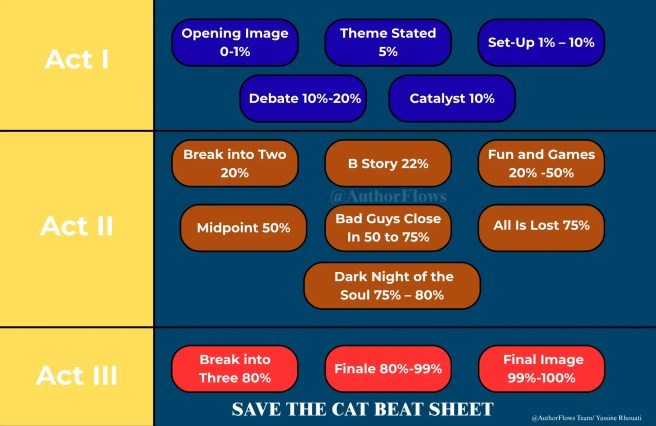
Once I got to the “oh yeah, Save the Cat made a lot of good points:” thought in my head, I realized I had trouble recalling what those good points were. Back through YouTube, again finding a gem in this Reedsy, vid summarizing the 15 cat-saving beats. Then I found this handy chart from this article. I’ll tell you what–these percentages really helped!
I locked myself in at 40 chapters. If the actual writing of the story demands 38 or 42, I’ll be flexible, but the plan was 40. That put the Catalyst at the beginning of chapter 5, the debate stretching through chapter 8, the B story kicking off about chapter 9, Midpoint at 21, Dark Night of the Soul in 31-32… I already had ideas of where I wanted the story go, but this more than anything else let me lay the brickwork for the yellow road to the Wonderful Land of Novel. Was it new information? Not really. Now I know how my Precalculus students feel when they factor their 457th trinomial and suddenly understand what they’d been doing in all 456 that came before it. Or in a more relatable metaphor, I felt like I was bowling with the bumpers up. Sometimes you need a little framework to nudge the ball back on course.
I’m not counting chickens before I even have eggs. I know I’m on step 3 out of 93 just to get a draft. I just wanted to share the feeling of relief and ease I experienced when I finally applied this structure deliberately. That coupled with my recent trend toward over-writing instead of the short story induced under-writing suggests that maybe this time will be the one that gets all the way to The End. I can’t wait to start putting words to page.
After a long wait, the results for Round 2 of the nycMidnight Flash Fiction Contest are in. The authors of the top three (3) stories in each group move on to the third and final round. My story placed…fourth. First Honorable Mention. Alas.
Sometime in the next week or two, I’ll put my thoughts together regarding the whole NYCM experience. I want to see the critique and let my mind settle before I attempt that. Check back if that’s something that interests you.
Avast, matey!
In other news that I can’t believe I haven’t blogged about, I sold a story to an anthology! Very soon, Raconteur Press will be releasing their pirate anthology, Planks & Plunder. They’ve asked that we wait for all versions (ebook and print) are available before pushing out links, but I’ll have them soon.
My story is called “The True Stone and the Faux Blade”. It’s a classic Caribbean-pirate tale (not space pirates, though I have an old one of those you could read/listen to on Escape Pod. Click here to check out “Leech Run”) with plenty of fantasy elements. Driven by vengeance, a girl joins a pirate crew captained by a collector of magical artifacts. But is she part of the crew of part of the collection?
This is the first story sale I’ve made in a long time. A looong time. Long enough that I can’t bring myself to type it. If you look in my bibliography, I guess you can do the math yourself. Some of that I can chalk up to decreased output, but that doesn’t make the hiatus any less frustrating. So it was a huge relief when I saw the congratulatory email. I’m using that boost to fuel a surge in my submissions so I can maybe get another one picked up somewhere.
I’ve seen the cover art. It’s nice. But no…I’m going to hold off until I can link you to it. That should be sometime in the next week. Watch for it soon.
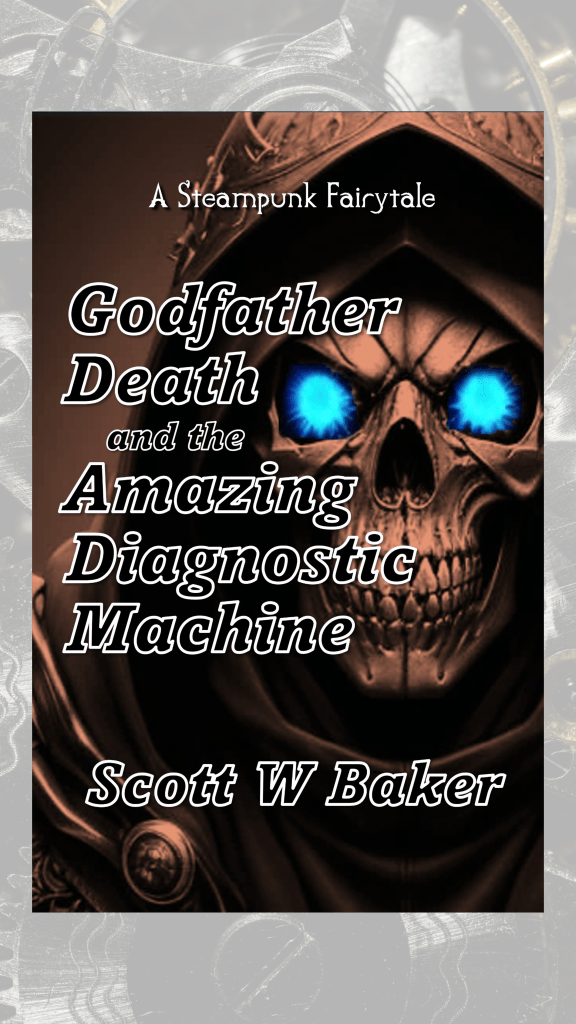
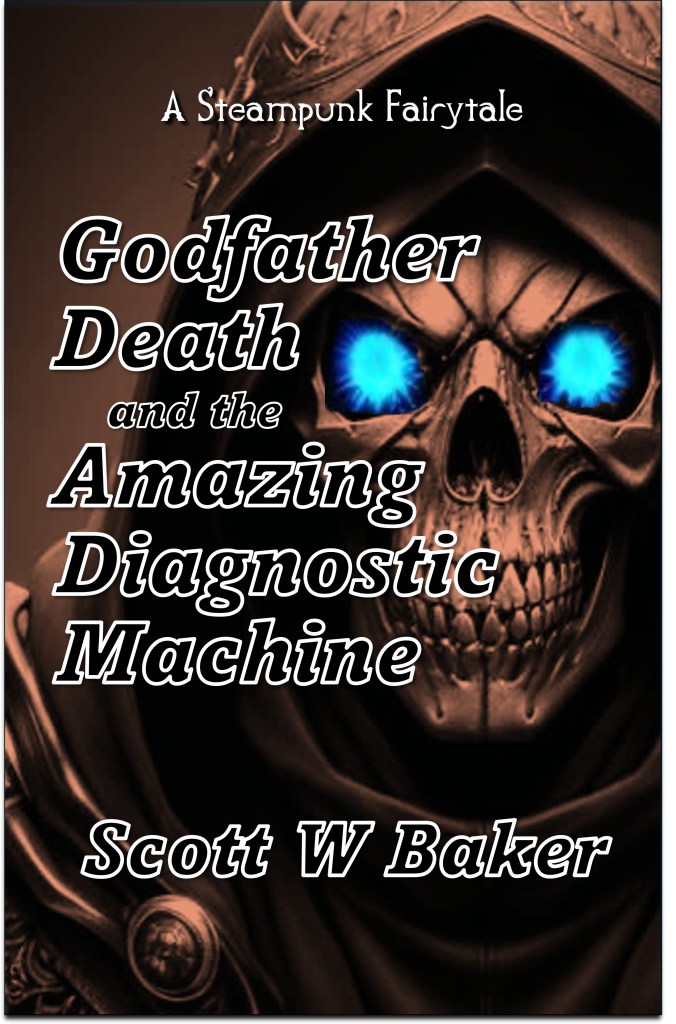
With Godfather Death and the Amazing Diagnostic Machine coming out June 30th, I’ve decided to try to get the word out. That’s harder than it sounds. My social network footprint is tiny. (You finding your way here is a blessing. Glad to have you!) My skill for talking myself up is…questionable at best. So How do I let the world know the greatest steampunk fairytale retelling ever is about to drop from yours truly? (See…that felt weird to say.)
The answer: TikTok
Allegedly.
Not just TikTok, but that has been my primary medium. I’ve poked at a YouTube short and will likely do at least one more before release date. But mostly I’ve been following the advice of Katie Wismer (a.k.a. Katesbookdate) as presented in this video. I’ll give the rundown of my interpretation, but let me start by explaining why I took Katie’s advice over others. (I’ve never spoken to Katie directly, so if she is alerted to my existence via Google Alerts or something: Hi Katie!)
Why This Advice
First off, I have scoured the internet (mostly YouTube) for advice on advertising a new book. And yes, there are a lot of voices out there, many saying similar things: establish a presence on social media, interact with the communities that overlap with potential readers, let people know you have a book coming out, and let people know a bit more about you. That’s four items that sound like A LOT of work. Where do I start? This is going to take how long? You mean I have to talk about myself?
Katie’s advice was titled “The one book marketing strategy you NEED to be doing”. Yeah, a very clickable title for me. She goes on to lay out a strategy that felt manageable. I can do that! She also wasn’t pushing a course to take or anything like that, just an advertising tool that has been successful for her. I’m not putting all my eggs into this basket, but it’s the basket I’m filling the fullest.
What am I doing?
If you didn’t watch Katie’s video already (heck, I linked it twice), I’ll give you my version of her advice. I’m sure I’ve misinterpreted parts and overlooked important nuances, but you can get the full breakdown from her.
Make carousels (slide shows) on TikTok. These are images with text.
The last slide is a direct quote (passage) from the book
She seemed to suggest you hint at the excitement without giving too much away
Use a trending sound that fits the theme of the book/passage/hook
Make sure your profile page does a good job of promoting you and the book. (This is my weak spot; I’ll get to why.)
Oh, and make sure you use good hashtags!
This felt like a process I could handle. No fancy equipment to buy or awkward performances required, just post some images with text. So I made some.
Okay, I didn’t follow the recipe perfectly. My carousels have a one-slide hook, the next slide starts a quoited passage, the last slide has the book’s cover.
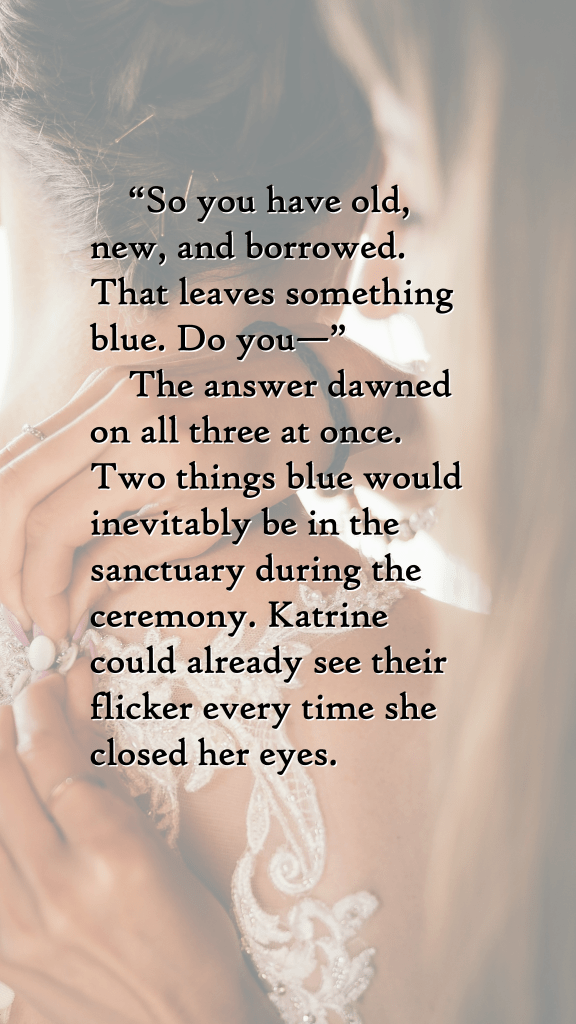
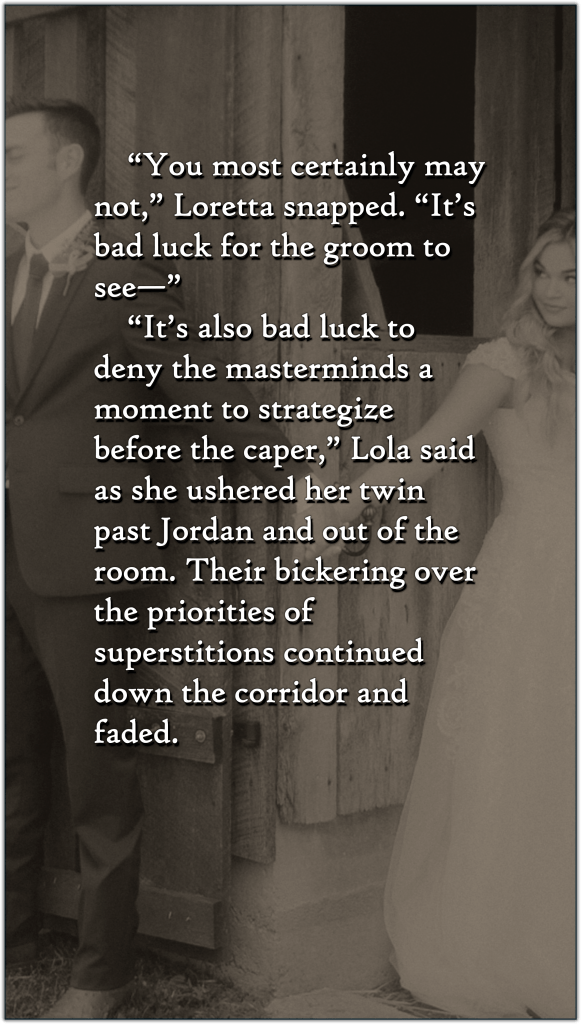
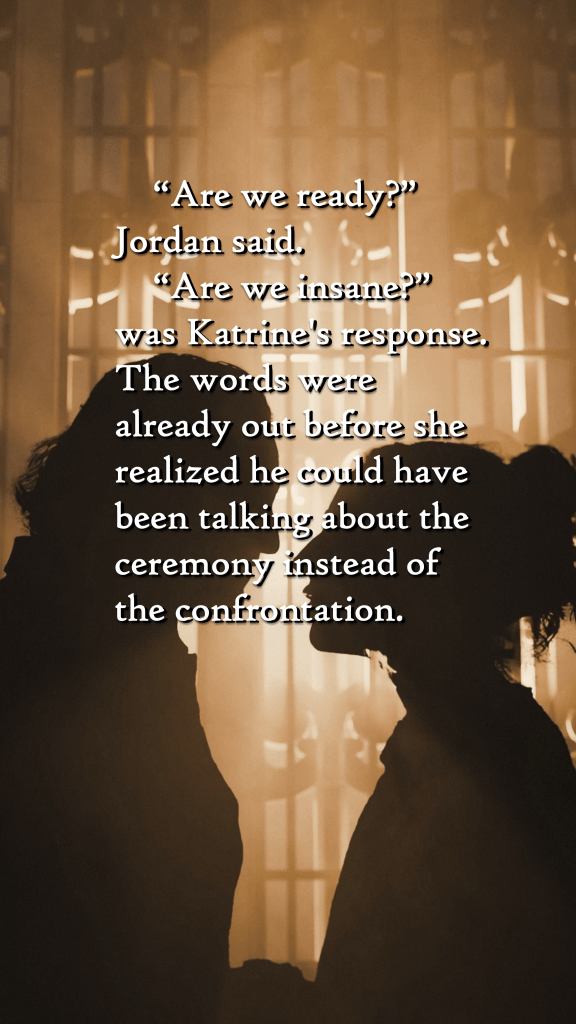
The first carousel I made had the whole passage on one slide. Depending on the size of your phone and the mightiness of your eyes, that could have been tough to absorb. My next few had the quote spread out over 2-4 slides, their text posted either over faded images or carefully curated around the images.
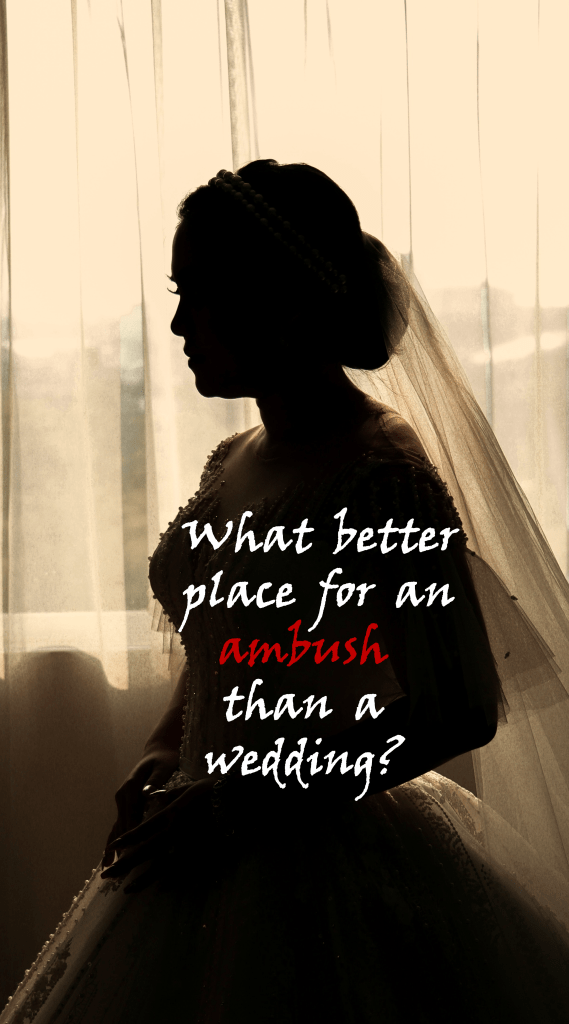
About half the hooks are the same or very similar with very similar images: a cloaked figure with a metal skull for a head with something along the lines of “When a man who was more metal than flesh entered her father’s shop, her life changed forever.” Others get more thematic to the excerpt/images. One scene takes place at a wedding, so the hook is “What better place for an ambush than a wedding?” You get the idea…
Music choices have been a battle between my preferences and TikTok’s preferences (mostly represented by my 18-year-old offspring). My first choice was George Michael’s “Father Figure” which has been hot on TikTok, though that song seems to accompany a fairly specific trend that has nothing to do with books. (My kid also thinks it might suggest the book is spicier than it is.) I made a couple with songs that had been used in a few thousand posts each. I made sure to swing big with a couple of the songs (uses in the millions and the tag “popular”). I have a mind to make a video or two with sounds that aren’t songs, but I haven’t made that leap yet. Are they helpful? It may still be too early to tell.
Alas, the profile page is the weakest link. Speaking of links…TikTok won’t let you have links to external sites (a.k.a. a link tree) until you have one thousand followers. So I’m only 998 followers away from that goal! Yeah, I’ve had a TikTok account, but I was only consuming until this past week. So right now, potential readers will have to find Godfather Death and the Amazing Diagnostic Machine by searching Amazon or even the whole internet for it. Suddenly, that wordy title is starting to seem like a better idea. (I also think it sounds steampunk-y.) This is why I feel like it was important to end with my cover image.
I don’t know if anyone has chased the book down yet. It doesn’t launch for another 5 days. It’s available for presale on Kindle, but that’s it. Either it’s impossible find out how many preorders there are or I don’t know how to figure it out. I guess the third option is that there have been none, but that would be knowing how many (zero is a perfectly good number, just not preferable in the wallet).
What am I definitely doing wrong?
I may be making several mistakes that I don’t realize, but there’s one I’ve definitely fumbled. Katie say to get a few “burner accounts” to post from as well as your main account. I haven’t done this, mostly because I don’t quite understand what the nature of the account should be. If the profile page is important, then what’s on the profile page of my burner? Some fictional reader that is allegedly posting fan-art for the book? Are they all supposed to be new vids or should these burner accounts be reposting the originals? I couldn’t wrap my head around that, so I haven’t made that leap. I’m 48; this is already a little overwhelming for me.
Am I reaching people?
Not as many as I’d hoped, but maybe more than I legitimately expected.
My first carousel (the one with the whole excerpt on one slide) has the most views and the most likes (261 and 7, respectively). Most of those were in the first couple hours. None of the others have topped 200 views.
The least-viewed is the wedding one, which has a female cover of “In the Air Tonight” that has been used over 100k times. I had expected the most interest in that one. My intention is to make some adjustments to that one and try posting it again (may change the song, but I like the fit). My research has suggested that there are a lot of variables at play for how many people see any given post, so reposting duds is a fair strategy.
These numbers don’t sound like a lot. They are well below the ones Katie cited in her video. I think established accounts have better reach. That’s why I’m not going to throw in the towel just yet. I’m hoping the needle will move by the end of July.
What else have I tried?
I mentioned that I dipped a toe into YouTube. What I really did was post my one outreach video as a Short.
Yes, I did make a video for TikTok that wasn’t a slideshow and wasn’t an ad for the book. This was a “What is Steampunk?” video. Please hold for my great shame: I made the video with PowerPoint.
Hey, I’m a teacher and I am very good with PowerPoint. Use what you know. I promise, my kid has thoroughly skewered me for it.
Anyway, this video analyzes steampunk as both an aesthetic and a literary genre. It’s about a minute. (I had to speed my voice up a little; noticeable but not terrible.) I do need to improve my audio recording skills; there’s a slight echo. The video ends with the book’s title and release date. There is a link to the Kindle preorder in the video description.
So was this little video popular? Not on TikTok. It’s neck-and-neck with my wedding carousel. On YouTube however? Just over 2000 views, 18 likes. (That’s almost 1% like-age…not sure if that’s good…doesn’t sound awesome.)
What’s next?
For now, I’m going to keep working the system. I’ll either pull some more passages from the book or repackage the ones I’ve used with altered hooks, songs, and/or images. Every time one gets 100 views, that’s more eyes (some new, some repeating) that see the book. The repeat views are possibly the most important since I heard somewhere recently (might have been Katie?) that it takes 8 exposures to a stimulus before someone takes action.
I’m also going to experiment with turning some of the carousels into videos (still the slides but they cycle for you). TikTok is a largely passive platform, so maybe it will hit differently. Remember the one video I did post didn’t get many views, but it also didn’t have a viral sound attached. This way I can also hit YouTube with them.
I’ll put some of this on Facebook too. I’m not an Instagrammer, so I’ll avoid that.
Is it worth it?
The labor end of things has been fairly mild (picture hunts were consuming but also fun). Honestly, I’m hoping that being in a niche subgenre like steampunk will help this book along. And If someone is looking through steampunk books and sees a cover they recognize, that could be the difference between them buying my book or someone else’s. Maybe something like this will help get enough of a bump to make a dent on the Amazon top sellers list for steampunk. Or maybe this whole exercise will just help me grow my TikTok footprint enough that the next publication’s ads (and there will be more) will have a little more reach.
Oh, don’t take my word for all this. Make sure you check out Katie Wismer’s video. And please, if anyone here has experience with this kind of advertising that could help me or others, please share it in the comments!
Remember the Vella experiment? The story I had serialized there is coming to Amazon at the end of June as a print book and e-book!
Godfather Death and the Amazing Diagnostic Machine is a steampunk novella think a half-length novella. Let’s unpack that sentence from the end. A novella is longer than a short story but shorter than the average novel. In this case, that’s about 50 pages; a nice, short read but long enough to get the full story in. Steampunk is a subgenre of science fiction and/or fantasy developing on Civil War era technologies; you see a lot of steam engines, gears, airships, etc. GDatADM definitely gets into the steam aesthetic but doesn’t forget the punk aspects of bucking societal norms.
Let’s go ahead and address the title. Yes, it’s long. It’s a mash of the Grimm fairy tale its based on (“Godfather Death”) and the steampunky invention central to the plot (the diagnostic machine). Splicing them together gives the story a quirky, antique feel appropriate to the genre. At least that’s the intention.
So what’s it about?
Katrine lives with her eleven siblings in her father’s prosthetic limb shop. When a client arrives who is more metal than flesh, Katrine and her siblings ascribe him the moniker Death. When he offers Katrine training and opportunity as a physician, he insists she call him Godfather. However, Katrine uses these gifts — including the diagnostic machine — in ways her godfather did not intend, shifting her perception of him from benefactor to nemesis. Can Katrine and her loved ones escape Godfather Death’s intentions for them? Find out in this steampunk retelling of the Grimm fairytale “Godfather Death” and never look at blue flames the same way again.
How do I get it?
I’m so glad you asked! You can preorder it on Kindle right now! It will also be on Kindle Unlimited for you voracious readers that subscribe to that. That will be available June 30th, as will the print version. (If it’s not June 2025 when you read this, then it’s available right now!) As with my short story collection, Baker’s Dozen, I’ll keep a link to the Amazon page in the sidebar of this site. Or you could just click a link now…
Once you’ve read it, pretty please, leave a review! It’s the nicest thing you can do for me. (Second nicest is buy Baker’s Dozen as a follow-up.) Reviews increase the visibility of the book which increases my visibility as a writer. Thanks in advance!
Often I hear of urban dwellers using commute time to do their reading: on a train, bus, or subway. I drive. There aren’t a lot of options here. But I still like to spend that time catching up on good books. Thank heavens for audio books. Let’s face it, listening to a book is not the same as reading it. It’s a close second, though, particularly an unabridged version. It can, however, reveal some of your favorite authors’ faults the same way that reading your own work out loud can reveal flaws in your stories.
I have listened to the first five Harry Potter books on tape or disc, though it’s been years. I wanted to reread them but couldn’t justify the time away from my perpetually growing reading list that I already neglect far too much. A coworker had the HP audios and I borrowed one. The performance by Jim Dale is awesome. His voices are great and his delivery is spot on for the wizarding world. I consider his performance the industry standard. If you haven’t heard him, get one of those books and listen. If I find other books he reads, I may get them just for his voice. Of course I haven’t gone looking…yet.
More recently I listened to K-PAX by Gene Brewer. If you’ve seen the movie, you got the gist of the story. There were differences, but the movie was well done, as was the book. The novel’s style lends itself well to audio performance. It was no Jim Dale, but it was good.
At the same time I purchased K-PAX, I bought Michael Crichton’s Next. Both were in a discount bin at the local bookstore. I guess I’m about halfway through it. I’ve never really read Crichton. I hope his other books are better. Considering that every version of Next (hardcover, paperback, and audio) were marked way down, I assume it is a sub-par example of his work. It’s extra tough as an audiobook; I keep wanting to flip around to make sure I know which character he’s talking about. It took five of the thirteen or so discs to get to the main plot. I’ll keep this example in mind as I write my own novels.
I also bought a book off iTunes, intending to listen on my iPod but it found its home on my school computer. The book is Dune. Yes, I am a SF heretic that has never read Frank Herbert’s classic of classics. I have good reason. I had a college roommate who watched three different movies EVERY night as he fell asleep: Dune, Waterworld, or The Muppet Movie. Muppet nights always led to better dreams. What was more, I married a woman addicted to the David Lynch film. Just looking at the title sent images of Brad Dourif and Sting. It was a borderline phobia.
Classic and 100% Sting free.
Anyway, the audiobook was a safer approach for me. The book is (obviously) much better than the film, though the movie does color many of my mental images. I’m glad I’m “reading” it this way. Numerous voices lend their talent to the presentation. I just absorb a chapter or two while I grade tests or homework during my planning period. It’s nice, relaxing, efficient.
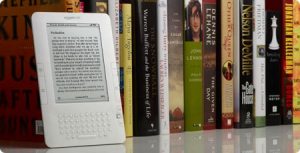
I love audio performances. The new Amazon Kindle 2 reportedly has an automated “read aloud” option. Not the same. I don’t know that I could take more than a page of robo-speak. Reviews I have seen call the Kindle’s vocal technique “serviceable”. I’m looking for a voice that adds to the telling, not detracts. Still, as a writer (even one far from audio contracts), I am concerned what the auto-read will do to audiobook rights. Will licensing a book to Kindle reduce the value of the audio rights? Infringe upon previous rights? There is a fair amount of discussion out there already about this, most writers groups preferring Amazon include an option to block the audio feature. Sounds like n inexpensive solution to me, especially if it causes problems with the Kindle acquiring key authors. Maybe Oprah could get behind the writers’ initiative. Anyway, I love audiobooks and would hate to see anything inhibit their continued production.
-Oso
Good for reading, but do you want it reading to you?
I had a noon dentist appointment last week, so I took the whole day off from school. It left me with a lot of spare time that morning, something my two-year-old strives to eliminate from my days. But she was at the sitter this morning and I went out for some breakfast and to visit the local used bookstore.
The used bookstore is the only bookstore in the “city” I work in. There is a Books-A-Million in the next little city, about half an hour away and just as close to my house. I am a bibliophile (mild case, not life threatening) and can’t resist wondering among the orderly shelves and tables of a proper bookstore, doing much more looking than buying.
Then there’s the used bookstore. Tens of thousands of books on mish-mashed shelves, crammed together in only the vaguest resemblance of alphabetical order, sectioned wherever there was space for the category. It’s beautiful. This trip I wound up purchasing five books and four magazines, spending under fifteen bucks. No too shabby.
Primarily I was looking for books and stories from the instructors at this year’s Clarion and Clarion West, also keeping an eye out for other names of note. I stumbled across (the only way to find anything there) Kim Stanley Robinson’s Green Mars in trade paperback for two dollars. That’s right, two. It was in very good shape, after all, I was looking for stuff to read, not display. Alas, I had not yet read Red Mars and didn’t want to try to absorb things out of order. But Robinson is teaching in San Diego (Clarion west’s new home — no more Michigan) so I held on to it. I’m glad I did since I found Red mars in standard paperback in another group of shelves, $3.50.
Among the hardcover SF books I found an old library copy of Heinlein’s The Cat Who Walks Through Walls. Not renowned as his finest work, but I have heard the title pop up on occasion. Three quarters was all they asked for it. I just hope I can read it, the pages are brittle and falling out. If not, well I’m out the cost of a really bad cup of coffee. Heinlein is obviously not teaching any workshops this year, but he’s still Heinlein.
The most intriguing find was a book entitled Science Fiction: History, Science, Vision, copyrighted the year of my birth. It starts with a brief history of the genre in literature and a little from other mediums. Then it’s an overview of 1977 science, starting with the scientific method and touching on biology, astrophysics, etc. Next it looks into various areas sci-fi likes to visit that might not be quite so scientific: utopias, imaginary worlds, and the like. Finally it comments on ten representative novels. I have not read any more than the table of contents, but I am very curious about what the Oxford University Press had to say about these things over thirty years ago. I nothing else, there are story ideas hiding in these pages begging to be discovered.
The last book was one I actually sought out. My space opera story, “Leech Run,” just received honorable mention from Writers of the Future. A nice enough showing, but I wondered what winning stories looked like. So I sought out some WotF collections and found the book from 2005. I am currently reading one of the stories that won a quarter; I’m not terribly impressed yet. Maybe it has a strong ending.
My magazine purchases weren’t all that exciting. I sifted through a pile to find some recent issues of Analog, Asimov’s, and F&SF. It didn’t even occur to me to seek Clarion authors, but I still wound up with a story co-written by Rudy Rucker in an Asimov’s. I also lucked into a copy of Isaac Asimov’s classic story, “Nightfall” in an anniversary edition of the magazine he founded. It was a good haul on magazines I would love to be in but haven’t read in several years.
It is worth noting the overwhelming dominance of Star Trek novels at this store. Two full bookcases. I know some of them are well written, but I have no clue which ones. I am a fan of most of the different series, especially TNG, but I have never read a Trek novel. I may grab one next time if I can get an idea of a good one, but I’m a little weary at the thought of reading a book in such a thoroughly explored universe. I already know the characters for seven seasons and several movies. I just can’t get excited about reading stuff I am already full of.
This has not been a review of any of these books, really no more than an announcement of my purchase and the processes that led me to them. It was a good haul. I’ll need to wait another few months to let the store’s inventory change before returning. Fortunately, I think I have enough to read while I wait.
I wanted to run through a list of the top ten books I use/have used to learn to write. I have no formal training to write, never took a creative writing class, didn’t even take my comp classes in college (exempt by ACT score). I took the basic English classes in high school. A lot of what I know came from reading fiction, but I have used a fair number of books for writers to hone my craft and a lot of trial and error. So here they are in roughly the order they proved helpful (1 being helpful when I was a beginner, 10 being helpful today).
How to Write Science Fiction & Fantasy (Card): This really helps put the genre in perspective. I like to reread this one for inspiration, but it was priceless when I got started. Anything by Card is fantastic. (Need a good fiction read with great characters? Try Ender’s Game.)
Get through the slush pile.The First Five Pages (Lukeman): So many of my stories had trouble getting started. This book helped me figure out what to look for and how to fix it. Lukeman’s follow-up book, The Plot Thickens, was far less useful to me, more a guide on how to build a story from the ground up. It’s got its place, but First Five is an excellent guide to getting editors to read the story rather than skim and reject.
The 38 Most Common Fiction Writing Mistakes (Bickham): I confess, when I first read this book, my stories were guilty of about ten. It’s a good guide for training your eye what to look for when revising. I still like to flip through the list every few months just to remind myself what to look for. You don’t have to avoid every mistake, you just need to know when you break a rule.
Harbrace College Handbook (Hodges): This is the collegiate bible for grammar and punctuation usage. It doesn’t matter much what year your Harbrace was written since rules in fiction writing aren’t set in stone. Again, it’s nice to know what convention is (or was) if you intend to break it.
Find the best word.
Flip Dictionary (Kipfer): It serves basically the same function as a Thesaurus but includes a lot of phrases and/or concepts related to a word. For instance, you want to know what you call the referee in a baseball game. You can look up either “referee” or “baseball” and get to “umpire”. It’s also handy for finding words related to words related to something. The “Flip” in the title refers more to how you’ll flip through the pages than having the definitions and words flipped around (although that description works, too).
Self Editing for Fiction Writers (Browne & King): This is similar to 38…Mistakes but goes a lot deeper into the parts of the story, looking at larger pieces and more subtle adjustments like tone and voice. The sections on dialogue are quite good, as is most of the advice in the book. I reread this recently to fish out some of the concepts that might still be eluding me.
Creating Short Fiction (Knight): Damon Knight knew what he was doing. His knowledge has guided many writers to professionalism. Not me yet, but it’s got me going a good direction. This is an especially good book for dealing with writer’s block or with stories that just won’t come out right (consult Fred). A lot of the information in this book is also in Kate Wilhelm’s Storyteller, which focusesa lot on the Clarion workshop, too.
Writing the Breakout Novel (Maass): Eventually I had to ask myself why my stuff isn’t selling when I see a lot of junk out there that does. I came up with two reasons: connections and X-factor. I have found no book for establishing connections, but this book tries to take some of the mystery out of the X-factor that can make even schlock sell. Maass, a big time literary agent, makes that X-factor something you can plan and work toward. It’s still hard to know if I’ve got it, but it gets you moving that way. (I think I’m around the V-factor right now.)
Elements of Writing Fiction Series (Card, Kress, Noble, Bickham, and others): I cheated a bit here. I had trouble selecting one book from this series, so I put the whole thing. I found Character and Viewpoint very useful early on while Beginnings, Middles, and Ends was a bit more advanced and Plotfell pretty well in the middle. Each book in the series was good, though Description was a little to poetic for my taste.
Paragons (Wilson, ed.): This is a book of short stories by masters, each story followed by an essay by the author regarding how they achieved whatever the story was renowned for (characters, plot, tone, etc.) I have had this book a long time and have not yet begun to use it effectively. It was published as a masterclass to follow Clarion. There’s a lot of skill and subtlety outlined in this book and I intend to read through it again as soon as I remember to bring it home from school.
There are a lot of other books I have used. Many of them repeat the same information that the above books spell out better. Some just plain sucked. It is worth noting that I have never used or read The Elements of Style (Strunk and White) which is a renowned tool for all writers. I think it does a lot of what I use Harbrace for. The bottom line for me is whichever books are readable and offer advice that improves your writing (directly or indirectly) is a good book. I hope this list might help some beginners (and non-beginners) find resources improve their craft and might inspire some discussion on other books I might have missed.






 At the same time I purchased K-PAX, I bought Michael Crichton’s


 Elements of Writing Fiction Series (Card, Kress, Noble, Bickham, and others): I cheated a bit here. I had trouble selecting one book from this series, so I put the whole thing. I found
  Scott W. Baker .net