A question for all you writers with blogs: is it worth the effort to post a story to your personal blog? Not a story you plan to sell, obviously, but one you already sold or one you can’t quite find the market for.
I can see the both sides of things. On the pro side, it gives your blog reade a taste of your writing, turns lurkers into potential fans. You have control of how long it’s available and can track how many people read it. As for cons, who really goes to blogs looking for fiction? It says something about a story’s quality to have the author pimping it him/herself for free. And of coure, it uses up some rights for the story (even second electronic rights could be worth something).
As I mentioned in my last post, I have a few stories that have vanished from the net that I’d like to get back out there, notably my first sale. Not to mention my military vampire story, my story for young readers. I even have a short comedy that can’t quite find a market. I’m thinking about putting one up here,adding more if it goes over well.
Someone asked me recently where they could find some of my published stories. I started to recommend this blog, but then remembered that I have no stories here. More importantly, I have no references or links to anyplace my work can be found. What was I thinking?
What I was thinking was that most of my work has been published to e-zines that clear out their stock to make room for new stories. The old stuff isn’t out there to be found. Most of it, anyway.
So what can be found? Just a few odds and ends, mostly.
The PARSEC (Pittsburgh SF consortium) anthology Triangulation 2004 includes my story “Chasers”. The story deals with generational colony ships and the people on the destination side thatrefuel them for deceleration. I wonder if maybe I should have submitted this story to WotF instead? I got a decent paycheck out of it (the most I’ve ever gotten for a story), but maybe I could have done more with it. I recently cleaned it up a little and intend to find a reprint market for it. This anthology is obscure enough that I suspect reprinting could be a realistic hope.
The long defunct magazine NFG ran my super-short story “In or Out” in its second issue. It was part of their clever but crudely named “Great 69er Contest” which consists of stories that are exactly — you guessed it — sixty-nine words long. I end up reading this story to my students a lot, but they never get it. This was, however, the source of my only reviews, positive ones at that. I can’t find archives of those, sorry.
I actually double-sold versions of my employment-line story “Occupational Dogma”; one to Eggplant Literary Productions (which caved before printing) and one to The Drabbler issue 6, a flash fiction magazine of 100-word stories put out by my friends over at Sam’s Dot Publishing. Sam’s Dot has published several other stories of mine, all electronically and gone. They’re good folks. Check them out.
I don’t know that I am archived anywhere else that doesn’t require a membership password (those are all works-in-progress in critique areas, not published). You can bet I’ll link to any new publications here.
More of my planning for the Clarion reality show, this one based off a website for pitching reality shows to producers. (It’s from a phase where I was one of those writers that didn’t write much.) Enjoy.
____________________________________
Title: Every writer knows the importance of title, but the options here are considerable. Anything from “Sci-Fi Writer” to “Who Wants to Be The Next Stephen King?” (or whoever)
Station: That’s easy: Sci-Fi Channel [sic]. How many science fiction fans envision themselves as writers? How many of them are watching the channel anyway? Or at least skim past it periodically on the guide. There are other channels that could work (PBS, Fox Reality), but they don’t carry the same audience. It could be web-based pretty easily, but that’s probably plan B.
Star Power: If it can make people tune in for ballroom dancing, it can do anything. While I don’t expect James Earl Jones or Harrison Ford, a drop-in from George Takei could be fun. Of course the real weight would come from authors. Household names would be best – writers that viewers would tune in (or at least Tivo) to see – but any writer with enough credits to elicit a two-minute bio would fit nicely. We’re talking Hugo winners, SFWA officers, anyone with a popular series, anyone with a story-turned-movie, or just folks with impressive resumes. Most guest instructors can expect to be Googled before and after broadcast.
Characters: Who’s going to participate in this three-ring workshop? Most potential viewers can be considered potential applicants. A workshop run by the Sci-Fi Channel will carry whatever credibility the cameras might detract. [Oops, that’s SyFy now…so maybe not.] I’m working under the theory that sponsors will pick up the tab for venue, instructors, and photocopies, so every Clarion Dreamer who claims the money excuse is a likely candidate. The selection process would be as long and arduous as any editing task in the world, but slush readers can be found. The show could even include interviews with the best and worst applicants (a bit like Idol auditions) or snippets of video from applicants (which many reality shows use to select their finalists). Read some bad lines, have an improv troupe act out some rotten scenes, and generally insult the hard-working writers who bared their hearts and souls in their writing samples. That might be too mean…or just good television. I do think there should be a personality component to the selection process as well as a writing component. We do want people to watch, don’t we?
Conflict: From all I’ve heard/read/dreamt about Clarion and its ilk, conflict will arise. One student gets singled out from the clique. Everyone hates Brenda’s story which she loves like it’s a kitten. The entire class unites against the instructor(s) for being too hard on them. The student who also teaches creative writing undermines the instructors by offering conflicting advice. The stress of writing and rewriting and reading and critiquing and not sleeping and aaaggh! Neighbors protesting the class’s inane (we’re all inane, especially in groups) behavior. Parents missing their kids. Wives missing their husbands. Students hating writing exercises. Week’s new instructor struggling to fit in with a tight-knit group. Hey, people watched The Real World for years, and all they did was live together to create drama. That’s going on, too.
Comedy: Has there ever been a Clarion without a watergun reenactment of Normandy? Have you ever seen a writer react to an unruly character three hours before a deadline? Ever seen twelve nerds (yeah, I said it) get together without laughing (outside a chess tournament)? The director and producers will surely have their choice of odd conversations, frantic adult competition, and rambling gibberish to choose from.
Viewer Empathy: Every good reality show has its viewers saying “I could do that,” or “I wish I could do that,” or “I’m glad that’s not me.” In that, this show is probably closer to The Apprentice than to any other reality show. The viewers want to envision themselves in that role, whether they could cut it or not. I suspect that every Apprentice contestant moved on to successful careers after the show. That’s our goal here.
Viewer Participation: Involve your viewer. How can we do that? Have them download stories and critique along with the show. Offer bonus footage on the net of real critique sessions. Sell the writers’ best (or worst) work in an anthology at season’s end. While I’m sure there is a way to build a voting system into the show, I doubt it would be necessary.
Winner: Let’s face it, the best reality shows have a winner at the end. The winner might be the first to finish the race, the person with the most votes, the person selected by the judge(s), the person hired for the job, the one who ate the most jellyfish, or the person least hated by competitors. Victory could take the form of a feature story in a magazine (or on scifi.com?), an agent, money, or a book deal. This winner can be chosen by faculty, participants, viewers/readers, or any combination of the above.
Concept Flexibility: How many times has your favorite reality show received an overhaul between seasons? Voting on So You Think You Can Dance? did, as did Dancing with the Stars. The Mole suddenly started using celebrities. American Idol completely altered its final selection process. Although the Milford-model is fairly specific in its needs, I doubt any Clarion has been identical to any other. I doubt Clarion West and Odyssey follow the same flow chart. I know the professionals of the Milford Conferences carried on differently than a room full of novices would. Changes are inevitable. Besides, why does it just have to be short stories? Next year could be screenwriters or comic artists.
This post is Jordan Lapp’s fault, him and Locus agazine. The idea has been swimming through my head for years. Locus ran an “article” about the fictitious Clarion reality show, Jordan mentioned it on his blog, now I’m posting my old article with a little poll. Enjoy.
************************************
I am a Clarion Dreamer.Are you?
How many are out there like me?Hundreds?Thousands?Tens of thousands?How many people out there want to write?How many out there believe themselves to be writers?How many are waiting for that one break that will make him (or her) the next great genre writer?For me, that elusive break takes the form of a writer’s workshop – Clarion.
Or Odyssey.Or Clarion West or South.Pick your poison, they’re all the same…the same in the fact that I did not attend.Same in the fact that I’m certain that if I attended, my career would take off the very next day.
I understand that I’m wrong.I realize that these workshops can provide their attendees with tools and techniques that guide the creative process.I fully appreciate that the best an attendee can expect is to replace years worth of rejection slips with a few weeks of tough criticism and sleepless nights.None of this blocks me from my delusion, this mirage of miraculous success that is the Milford-model writing workshop.
Again I pose the question: how many out there are like me?How many writers know they’re better than the bums that go to these workshops?How many are convinced they can spot the flaws in another author’s story despite a depressing inability to correct their own?How many wish they could be at least a fly on the wall at such a workshop?
Writing is an art form, no different from singing or dancing or backstabbing in a jungle or racing around the world.Have I lost you?I’m talking about television.Reality television.Ironically I’m talking about the shows that require no writers (or only concept writers) because a million-dollar prize is a lot cheaper than paying a dozen actors and writers and shooting take after take.People tune in to listen to the recording artists of tomorrow.Or to see if Reuben wins immunity.Or if that obnoxious team can make it to China before the sweet old couple.Or if the guy from Saved by the Bell can dance.
Would people tune in for a chance to see what a Milford-style workshop is really like?Would they log on to read excerpts from that funny guy’s story?Or that hippie chick’s story?Or that arrogant fat guy’s story?Would they vote for the story they liked best?
I confess that what I propose violates one of the cardinal rules of the Milford-model: no spectators.All due respect to the late Damon Knight (Milford’s founder), but maybe the time for privacy has gone.A writer who wants to sell needs name-recognition, promotion.What better way than to throw that writer on the television for seven to fifteen weeks?
Like any show it would need a title.“Who Wants To Be The Next Asimov?”or more succinctly “Sci-Fi Writer”.The latter would work especially well if the show found its most obvious home on the Sci-Fi Channel.
The conference model need not be disturbed.One professional writer would guest-lecture each week, taking part in the critique process as well as providing insight into the profession in general.One would obviously hope to attract big names to this highly public event – names that would bring an audience to the show – but any author with a career substantial enough to warrant a two-minute bio could find a niche.(After all, how many American Idol fans really remembered Peter Noone?)
Could a show this narrowly focused really bring in an audience?Could it really be entertaining enough to tune in more than once or twice?Why not?Are speculative writers any more rare than clothing designers?Chefs?Singers and dancers?Washed up celebrities?If they all get their own reality shows, we deserve one too.In fact I contend that we, the speculative writers, outnumber most of these pigeon-holed reality contestants.How many science fiction readers are there?How many fantasy readers?Horror?How many of them write (or try to write or want to write)?That’s right, most of them.Try it: meet a stranger in the sci-fi section of a bookstore and ask her if she has ever tried to write this kind of thing.Don’t be creepy about it, just strike up a polite conversation.You may want to map out the exits first just in case she insists on telling you all about Druzida, the elf-vampire and her fifteen-thousand-page battle against the evil dragon, Thhrp.Or about the Glxx-ian invasion of Kalamazoo.Bottom line, the people watching reruns of Buffy, Star Trek, Firefly, Xena, or The Twilight Zone are more than likely writers,.
But how entertaining is a Milford workshop?I guess it depends on who goes.I understand that watergun fights and superballs were staples of the Clarion experience for years.So were sleepless nights, stories eviscerated by peers and pros, rivalries, coups against instructors, and priceless tidbits of knowledge.Sounds like good television to me.
So why am I writing this article instead of pitching this show to the big-wigs and becoming the next Mark Burnett?Well, that’s not what I do.I dream big ideas share them with people who might think they’re entertaining.I write, not pitch or produce.Besides, before I could pitch a show I’d have to support the claims I’ve made: 1) people would watch this show, 2) sci-fi fans are almost all writers, and 3) a bunch of geeky writers can be entertaining.That’s where you come in.Yes, you.If you’re reading this then you are likely part of my target audience, so I want to know what you think.Would you watch this show (at least a few times) if someone made it?Would your friends?Would my friends?If you think I’ve missed the mark, I want to know.Got an idea that might make this work better?I’m all ears.
Oh, and if you work for a network that wants to start filming this tomorrow, we really need to chat.
I’ve been working on a quaint little story the past few days (the Kree story is in time-out for bad behavior). I won’t go into details on the plot, but I was trying to put the first draft to paper and kept getting stuck trying to finish it. I knew I was close to an ending, but I just couldn’t find the angle of approach. I couldn’t even bear to look at it during my pergatory of a day at school. I opened up my laptop tonight and realized…it was already done.
Don’t get me wrong (I say that a lot, don’t I), this is about as rough a rough draft as I’ve ever created. The idea was still sketchy and my characters need better motivation and the setting is beige, but the essence of the story was complete. It’s one of those stories without a satisfying ending; I knew that before I started writing it. I just kept trying to trudge along into unnecessary summary. Either the reader gets it (gets something out of it) or she doesn’t.
Fred (as Damon Knight called the subconscious) must have known when the story ended. I just kept writing and deleting back to the exact same spot, the spot where one character walks out and the story ends.
Now the hard part: editing. Writing can be tough, grueling, but it’s the creative side. I made something out of nothing. Now I need to make something good out of something raw. This is the sculpting part, an art all its own. It seems more satisfying when I edit. I get the sense of doing something right, making something better. It’s still tough. Most things worth doing are.
This story, titled “Roshambo”, comes in about 1800 words. It may grow a little as I flesh out the setting, maybe put more character into the beats, but it’s still the shortest thing I’ve written (over drabble length) in quite a while. I hope that’s a good thing. We’ll see.

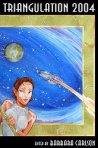 The PARSEC (Pittsburgh SF consortium) anthology
 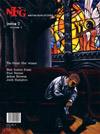 The long defunct magazine
 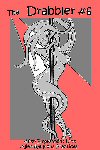 I actually double-sold versions of my employment-line story “Occupational Dogma”; one to Eggplant Literary Productions (which caved before printing) and one to
  Scott W. Baker .net