The Tough Part

I always find it difficult to move on once I finish a story.  I get a big “now what” hanging over me.  Do I go back to an old, incomplete project or press on to a new story.  I refuse to start any new novels until I get one or more finished.  But short stories can be started on a whim.

So what to do?  I have a story, “Thinking Out Loud”, that never sold despite being a very good story.  Looking back, I find that I didn’t really build a protagonist the reader would care about.  It occurred to me to rewrite the story from a different point of view.  It’s a completely different story that way.  I may try toggling back and forth between the old POV and the new one, which turns out to be jumping between an army general and an inmate/test subject.  I think it will be a massive rewrite and am a little overwhelmed by the thought of it.  I keep putting it off.  It might be a good project for Clarion (cross fingers).

As for new projects, I have a few things I’ve brainstormed.  One story about a future society where the females are the warriors.  Lots of ideas as to why the women must fight, who they fight against, and what internal struggles the protag goes through.  I need to develop the characters a bit more, but it’s got steam behind it.  I have another that is basically a superhero-working-for-the-government story that lost all momentum.  I’m not sure I’m ready to pick that one back up.  And of course there’s my young adult SF novel (set on a sub-light colony ship), my military clone novel (probably my strongest idea), my SF comedy novel (hung up on the first major event), my YA fantasy novel (first thing I ever wrote; complete but needs a major rewrite), and my Fultus stories that need to be expanded to novella or novel length.  Whew.  

I may look through my unfinished works and see what grabs me, be it something here or something else.  We’ll see.  I think I agonize more over what to work on than over what to type.  I’ve been in a short story mood with my focus on Clarion, but who knows.  I’ll be sure to post when I make up my mind.  

I think part of my problem with moving on is the pain of waiting to hear the fate of stories in market slush piles.  “Brother Goo” is still in the mail to Cricket.  “Glow Baby” is working its way through editors at Strange Horizons.  “Leech Run” is in the slush at Baen’s Bar, fighting for an opportunity to slip into the Jim Baen’s Universe that way (past critical eyes of readers and editors alike).  I can’t remember ever having three stories in the wind at once.  Chilling.  But I have to keep working.  That’s what a real writer would do.

-Oso

More Titles from WordPress Tags

I looked at the updated list of WordPress global tags and noticed some more potential titles.  They amuse me, so here they are.

  • “Sex Sotfware”: That could go a lot of different directions, couldn’t it?  Anything from robots having sex together (for robot procreation…meshing software the way people mesh DNA to make a child).  Or a computer program to help guys score (Will Smith’s Hitch meets Windows).
  • “Fun War”: A party in every landmine.  This could be someone who loves the art of war in a very active sense or could be a war over types of recreation.  A civil war over what is the national pass-time?  Maybe too much.  Or it could be a reality show about war, the producers coming up with more ridiculous goals for the armies.  I’d hate to see that elimination round.  Or (one more) kids enlisted to the army based on video game prowess.  This reeks of The Last Starfighter, maybe even a little Ender’s Game.
  • “Faith Marketing”: They do it now, don’t they?  A story about a cult leader that preys on shopaholics, maybe even home shopping addicts.  Trying to buy your way into heaven is nothing new, but investing n heaven real estate or keeping up with God’s fashion do’s and don’ts or even an ad campaign about heaven.  Not too terribly speculative, but it can go somewhere.  I doubt I’ll write it.
  • “Musings School”: Could make a cute flash piece about a school for random thoughts.  How do you teach people to think?  It could be a dystopian society where thoughts are discouraged, but this underground school tries to get people thinking for themselves, starting small.  What do you think about licorice?  ducks?  your government’s oppression of its people by sanitizing the media and ostracizing independent thinkers?

That’s all for now.  Check the global tags for your own ideas or check out my previous post.  Happy writing.

-Oso

Sent out two

I went ahead and sent “Brother Goo” to Cricket today.  Duotrope suggests it will be 3-6 months before I hear back.  I’ll miss that story while it’s gone.  If it gets rejected, I’ll have to strongly consider a rewrite.  I haven’t posted my full version (submitted slimmed down version) to Critters for review, but I will.  There seems to be no rush.

I also posted “Leech Run” to the slush mesage board at Jim Baen’s Universe.  It’s a neat idea, posting stories to a password protected page (so there is no technical publication…same as Critters does) to get comments from readers.  Editors also peek at the stories, requesting rtf files from stories they find particularly promising.  I’m running it through the “Introducing” bracket, basically contending with other writers that haven’t breached pro level markets.  If you are a Baen’s Bar member, you can give it a read and post some comments, especially if they are helpful comments.

At any rate, I’m keeping my top-end stuff out there.  Even a blind fisherman gets a nibble or two, right?

-Oso

Story for Young Readers

In a response to an open plea from a youth-oriented SF magazine’s editor, I wrote a story about a boy and the alien that possessed his brother.  Not the most original of ideas, but it was for kids.  As I wrote, new twists on old ideas came to me and found their way to the page.  Now I have two problems.

First, the story is too long for the market that inspired it.  The market caps at 2000 words and this story is just over 2300.  I could probably cut a few hundred words if I wanted to, but I’m pretty sure it would weaken the story.  After all, it’s not the plot that’s special, it’s the relationship between the brothers (even though one of them is not technically there).

Then there’s the other problem: I think this story is too good to start with this particular market.  This market offers only token payment and will have minimal exposure value.  I like the market and the people who run it, but I am trying to establish myself as a professional.

I may try the story in some non-genre youth-oriented publications, maybe Boys’ Life or Cricket.  I need to look up their guidelines first.  I may also try Black Gate (though I think they may be closed to submissions right now) or some other zines that insist their demographic begins with preteens.  It might prove a futile endeavor, but it would be a shame to sell a story for pennies when it might have been worth something.

I’ll probably drop it in the Critters queue while I wait for responses.  I’m having some trouble with the title: “Brother Goo or Why I Threw My Brother in the Ocean” is what I have right now.  Old school “or” format.  Unfortunately I feel like the first sounds like mucus and the second gives away too much.  I may just try “Brother Goo” and see how it is received.  Look at that, I made a decision right here in the middle of my blog and you were here to witness it.  Momentous.

-Oso

UPDATE: I checked out some of those guidelines.  Boys’ Life has a 1500-word limit.  Cricket‘s is 2000.  I went back through the story and trimmed it down to 1990 (the last cut I made was a full paragraph).  I probably could have left a little more in there.  I’ll reread the cut version in a few days, after it’s filtered out of my memory some, then maybe send it to Cricket.  It could still make the rounds of the standard genre magazines, but Analog won’t be likely to touch it.  I’ll probably stick to semi-pro markets outside the youth-oriented zines.  Time will tell how it all works out.

Catching Up on Reading as I Drive

Often I hear of urban dwellers using commute time to do their reading: on a train, bus, or subway.  I drive.  There aren’t a lot of options here.  But I still like to spend that time catching up on good books.  Thank heavens for audio books. Let’s face it, listening to a book is not the same as reading it.  It’s a close second, though, particularly an unabridged version.  It can, however, reveal some of your favorite authors’ faults the same way that reading your own work out loud can reveal flaws in your stories.

I have listened to the first five Harry Potter books on tape or disc, though it’s been years.  I wanted to reread them but couldn’t justify the time away from my perpetually growing reading list that I already neglect far too much.  A coworker had the HP audios and I borrowed one.  The performance by Jim Dale is awesome.  His voices are great and his delivery is spot on for the wizarding world.  I consider his performance the industry standard.  If you haven’t heard him, get one of those books and listen.  If I find other books he reads, I may get them just for his voice.  Of course I haven’t gone looking…yet.

More recently I listened to K-PAX by Gene Brewer.  If you’ve seen the movie, you got the gist of the story.  There were differences, but the movie was well done, as was the book.  The novel’s style lends itself well to audio performance.  It was no Jim Dale, but it was good.

nextAt the same time I purchased K-PAX, I bought Michael Crichton’s Next.  Both were in a discount bin at the local bookstore.  I guess I’m about halfway through it.  I’ve never really read Crichton.  I hope his other books are better.  Considering that every version of Next (hardcover, paperback, and audio) were marked way down, I assume it is a sub-par example of his work. It’s extra tough as an audiobook; I keep wanting to flip around to make sure I know which character he’s talking about.  It took five of the thirteen or so discs to get to the main plot.  I’ll keep this example in mind as I write my own novels.
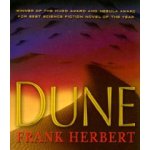
I also bought a book off iTunes, intending to listen on my iPod but it found its home on my school computer.  The book is Dune.  Yes, I am a SF heretic that has never read Frank Herbert’s classic of classics.  I have good reason.  I had a college roommate who watched three different movies EVERY night as he fell asleep: Dune, Waterworld, or The Muppet Movie.  Muppet nights always led to better dreams.  What was more, I married a woman addicted to the David Lynch film.  Just looking at the title sent images of Brad Dourif and Sting.  It was a borderline phobia.

Classic and 100% Sting free.

Anyway, the audiobook was a safer approach for me.  The book is (obviously) much better than the film, though the movie does color many of my mental images.  I’m glad I’m “reading” it this way.  Numerous voices lend their talent to the presentation.  I just absorb a chapter or two while I grade tests or homework during my planning period.  It’s nice, relaxing, efficient.

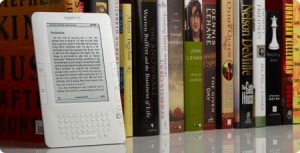
I love audio performances.  The new Amazon Kindle 2 reportedly has an automated “read aloud” option.  Not the same.  I don’t know that I could take more than a page of robo-speak.  Reviews I have seen call the Kindle’s vocal technique “serviceable”.  I’m looking for a voice that adds to the telling, not detracts.  Still, as a writer (even one far from audio contracts), I am concerned  what the auto-read will do to audiobook rights.  Will licensing a book to Kindle reduce the value of the audio rights?  Infringe upon previous rights?  There is a fair amount of discussion out there already about this, most writers groups preferring Amazon include an option to block the audio feature.  Sounds like n inexpensive solution to me, especially if it causes problems with the Kindle acquiring key authors.  Maybe Oprah could get behind the writers’ initiative.  Anyway, I love audiobooks and would hate to see anything inhibit their continued production.

-Oso

Good for reading, but do you want it reading to you?

“Blog Faith” and other stories not yet written

I commented on another blog (comments seem to have vanished) about some ideas for stories, particularly story titles.  It is interesting because a coworker recently was telling me that he would love to write and he feels he has the mastery of language to do so, but he has no ideas.  Maybe I’m blessed with an overabundance of ideas (not all good, but ideas galore), and I am constantly finding new inspirations.

One place I found ideas calling to me is the WordPress global tags list (http://en.wordpress.com/tags/)  This is an especially interesting place for me since the list is perpetually changing.  If you read through the tags two or three at a time, story title s are hidden there.  The ideas to accompany them must come from the mind (or soul or whatever), but it’s a kick start.

At this moment, these titles appear consecutively on the page, inspiring stories I will summarize in a line or two.  I have no fear of sharing this tactic or even the stories I think up since even if my story was directly stolen from here, my story and your story would be nothing alike.  So feel free, borrow my thoughts.  (How cool would it be to find your story by one of these titles in a mag?  Almost as cool as finding my own.)  I won’t be likely to write the stories to go with these anyway.  This is purely for my own amusement and hopefully yours.

  1. “Mp3 Kids”: There a re a couple ways to tae this one.  How far a stretch is it for a generation of kids to be addicted to Mp3s so much that all information must be transmitted this way?  Almost like uploading directly to their brains.  Or more creatively, women who can’t have children (or empty-nesters or whoever) start downloading children to their portable devices.  They care for them, teach them, discipline them, a lot like a Sims game or something.  The whole obsession could get out of control.  This is actually a lot like my story “Glow Baby” (currently seeking a market).
  2. “Real Estate Animals”: An Animal Farm-like satire where wild animals sue in court for the property rights for their habitat.  They could get insects involved and tie up some major construction project for decades, each species suing in turn.  Then the corporation files to have the cases consolidated and the animals pack the courtroom with their ilk (or elk).  Wacky hijinks ensue (pun intended).
  3. “Fiction Theology”:  Fairy tale characters (or other characters) gather to discuss their positions on God and religion.  The discussion might do well to focus on a hot topic (gay marriage? abortion?).  This could be done cleverly or very poorly.
  4. “Blog Faith”:  Protagonist searches the internet for signs from God, focusing perhaps on specific blog sites.  He/she might find hidden patterns in the postings (similar to the films A Beautiful Mind and The Number 23) and pursues a life change based on them.  Or maybe it’s all based on one post that is completely misinterpreted.  Can you imagine someone mistaking something here as a holy sign?  Let’s hope it isn’t from my Morally Unusual post.
  5. “Random Personal Thoughts”:  A pretty but naive teenage girl starts picking up thoughts from classmates.  She starts with guys: checking her out, thinking…teenage guy thoughts, maybe trying to look up her skirt.  Then she starts receiving them from girls: jealous thoughts, insecure thoughts.  Each thought might get progressively more personal, first amusing her, then scaring her, finally spurring her to action for someone’s benefit.  Basically and early psychic manifestation.  This might be a good one for me to write considering my daily proximity to teenage minds (rather their bodies are proximal…who knows where their minds are?).

I feel like there were more amusing options the first time I tried it.  Of course you could mix and match words from anywhere on the page to develop your own combination, changing nouns to adjectives and such as needed.  This is basically the same as opening a dictionary to two random words or Damon Kight’s connecting index terms on pages of a SF catalogue (the origin of his story “Stranger Station” according to Creating Short Fiction).  The PARSEC Wrighting Contest uses a prompt similar to this, as I suspect do many others.  (I advertise this one because my 2004 entry, “Chasers” was published in their anthology, Triangulation, even though it did not place in the contest.)  Try your own variation and get writing.

Critters online workshop

A long time ago (six years?), I went looking for a way to improve my writing. I looked around online (where else does one look these days?) and discovered the existence of workshops. This was where I discovered Clarion and its ilk, but I wasn’t ready for that and couldn’t begin to afford it. Fortunately I also I discovered Critters.org.

Critters is the world’s largest critique group (to my knowledge). It’s definitely the most open. Anyone can join and all stories can be critiqued as long as you critique a minimum average number of other people’s manuscripts — about three a month. I must confess, the first time I had a story critiqued by the group, it was politely demolished. Gradually the comments grew more positive, and now I find most of them say more good than bad.

Oh there’s always a few that carry an air of hostility, as if nothing written by anyone but them will ever be worth publishing. And there are others that just don’t prefer a specific story. But by and large, Critters leads me to believe my writing has come a long way. But what good are atta-boy comments to me?

Critters does a great job of letting me know if a story is confusing or if the pace is too slow (athough some people want every story to be a Jason Statham movie), or catching spelling and/or grammar mistakes. The members spot POV problems well, devour opportunities to say “show-don’t-tell”, and never miss a chance to question dialogue mechanics. These can be helpful because authors frequently are blind to these issues in their own work. I still run almost every story through the queue at Critters for this kind of advice plus the infrequent gem of insight someone drops in my lap.

What Critters can’t tell me is whether a story is ready to sell. Many Critters members have sold stories, but do they know what made their work saleable and what makes their other stories rejection magnets? I sure don’t. I like to think it’s a difference in taste, but I doubt it. I am confident that I am making significant errors that are fixable but invisible, often even invisible to the rejecting editor. Critters is yet to help me with those problems.

It’s not that I haven’t received comments that could push me in the right direction. I probably have. But which ones? I like to think (naively) that comments I offer to other writers are in the top quartile of significance (everyone knows they are the smartest, right?), but how is a writer to know how brilliant my comments are? Or are they rubbish? If ten people tell me that a speech pattern is hard to understand, I will probably change it. If three tell me it’s hard to understand, three rave about how perfect it is, another points out the misspellings the dialect created (without mentioning dialect at all), and two don’t even mention it, what is a boy to do?

This blog entry is not designed to disrespect Critters. Far from it, I advocate Critters to any writer, beginners to pros. What I want to do is make some suggestions on how to use it as a writer. Some day, I will assemble my thoughts on how to approach Critters as a critiquer (arguably a more valuable angle).

  1. Investigate the accuracy of line edits. Do you really need a semicolon there, or will your original comma be sufficient? What is the specific definition of the word they recommended? These people may be English professors or burger flippers and it’s important to remember that fiction has room for the styles of either. Characters end sentences with prepositions and should. Even narrators should. “Correct” may not be the best way to write. After all, “Woe is I,” is the grammatically correct sentence. But the burger-flipper may not be the guy to listen to, either. Sentence structures should be varied while still being clear. Some people want every sentence to follow the same build, as if they will be expected to diagram them and want to know where each part lies. Look it up before you change it.
  2. Never take a critter’s word as law. One person may say something that makes you slap your head and say “why didn’t I see that?” Don’t change anything yet. Consider everyone’s comments first. A problem in the story’s middle may not be caused by the writing in the middle. In my experience, Critters tend to notice different problems surrounding the same part of a story. They all suggest different fixes. Often those suggestions will fix one problem but not the others. Look for the fix that will take care of everything. Maybe that means merging two characters into one (seldom suggested to me despite the usefulness of the exercise) or merging two scenes or sometimes as simple as changing a few words. This is a vague comment but is the key to gleaning useful information from a cluster of critiques.
  3. How is the critiquer’s writing? A few typos aren’t a big deal, but if it’s tough to decipher what a critique is saying, do you want to take its advice on how to clarify your story?
  4. Sometimes the places that they “don’t know how to fix it” are the places that need the most attention. Think about it, an editor can request a rewrite with a shorter chase scene or with the flashback cut or a thousand words shorter. They can’t say “fix the part on page seven that seems not right for some reason”. I guess they could say that, but they won’t. Rewrites aren’t sales, but they are wanna-buys. If they like it but can’t put a finger on why they can’t buy it as-is, they’ll end up passing. So trust people who scratch their heads in places (in accordance with number two), they may be the most valuable comments you get.
  5. If someone is tactless, they probably don’t know what they are talking about. Critter’s policy is to use diplomatic language, expressing every thought as the critiquer’s opinion rather than hard fact. Some things will come across a little harsh (no one wants to read ten thousand IMOs), but you know when someone thinks they are God’s authority on publishing. If they were so smart, they wouldn’t be messing up the Critter’s policy. Still, you should read their comments. Almost every critique has value, if only to reinforce the comments of others.
  6. Don’t take it too seriously. Most of these people are far more focused on their own writing than they are on yours. Why should they like your story? You brought it to them to look for the flaws, they have nothing else invested in it. Editors at least want to like your story when they read it. Hey, I don’t like most of the stories I read on Critters. I only like about half of the ones I read in magazines. My opinion is worthless to you; my complaints and advice (combined with everyone else’s) can help you improve your story tremendously.

If you use it wisely, Critters can make your stories (and your writing in general) much better. It did mine. But it takes a lot more to make them good.

-Oso

Writing Books

I wanted to run through a list of the top ten books I use/have used to learn to write. I have no formal training to write, never took a creative writing class, didn’t even take my comp classes in college (exempt by ACT score). I took the basic English classes in high school. A lot of what I know came from reading fiction, but I have used a fair number of books for writers to hone my craft and a lot of trial and error. So here they are in roughly the order they proved helpful (1 being helpful when I was a beginner, 10 being helpful today).

  1. How to Write Science Fiction & Fantasy (Card): This really helps put the genre in perspective.  I like to reread this one for inspiration, but it was priceless when I got started.  Anything by Card is fantastic.  (Need a good fiction read with great characters?  Try Ender’s Game.)
  2. Get through the slush pile.
    Get through the slush pile.
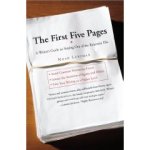
    The First Five Pages (Lukeman): So many of my stories had trouble getting started.  This book helped me figure out what to look for and how to fix it.  Lukeman’s follow-up book, The Plot Thickens, was far less useful to me, more a guide on how to build a story from the ground up.  It’s got its place, but First Five is an excellent guide to getting editors to read the story rather than skim and reject.
  3. The 38 Most Common Fiction Writing Mistakes (Bickham): I confess, when I first read this book, my stories were guilty of about ten.  It’s a good guide for training your eye what to look for when revising.  I still like to flip through the list every few months just to remind myself what to look for.  You don’t have to avoid every mistake, you just need to know when you break a rule.
  4. Harbrace College Handbook (Hodges): This is the collegiate bible for grammar and punctuation usage.  It doesn’t matter much what year your Harbrace was written since rules in fiction writing aren’t set in stone.  Again, it’s nice to know what convention is (or was) if you intend to break it.
  5. Find the best word.
    Find the best word.
  6. Flip Dictionary (Kipfer): It serves basically the same function as a Thesaurus but includes a lot of phrases and/or concepts related to a word.  For instance, you want to know what you call the referee in a baseball game.  You can look up either “referee” or “baseball” and get to “umpire”.  It’s also handy for finding words related to words related to something.  The “Flip” in the title refers more to how you’ll flip through the pages than having the definitions and words flipped around (although that description works, too).
  7. Self Editing for Fiction Writers (Browne & King): This is similar to 38…Mistakes but goes a lot deeper into the parts of the story, looking at larger pieces and more subtle adjustments like tone and voice.  The sections on dialogue are quite good, as is most of the advice in the book.  I reread this recently to fish out some of the concepts that might still be eluding me.
  8. Creating Short Fiction (Knight): Damon Knight knew what he was doing.  His knowledge has guided many writers to professionalism.  Not me yet, but it’s got me going a good direction.  This is an especially good book for dealing with writer’s block or with stories that just won’t come out right (consult Fred).  A lot of the information in this book is also in Kate Wilhelm’s Storyteller, which focusesa lot on the Clarion workshop, too.
  9. Writing the Breakout Novel (Maass): Eventually I had to ask myself why my stuff isn’t selling when I see a lot of junk out there that does.  I came up with two reasons: connections and X-factor.  I have found no book for establishing connections, but this book tries to take some of the mystery out of the X-factor that can make even schlock sell.  Maass, a big time literary agent, makes that X-factor something you can plan and work toward.  It’s still hard to know if I’ve got it, but it gets you moving that way.  (I think I’m around the V-factor right now.)
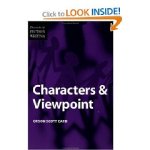
  10. charviewElements of Writing Fiction Series (Card, Kress, Noble, Bickham, and others): I cheated a bit here.  I had trouble selecting one book from this series, so I put the whole thing.  I found Character and Viewpoint very useful early on while Beginnings, Middles, and Ends was a bit more advanced and Plot fell pretty well in the middle.  Each book in the series was good, though Description was a little to poetic for my taste.
  11. Paragons (Wilson, ed.): This is a book of short stories by masters, each story followed by an essay by the author regarding how they achieved whatever the story was renowned for (characters, plot, tone, etc.)  I have had this book a long time and have not yet begun to use it effectively.  It was published as a masterclass to follow Clarion.  There’s a lot of skill and subtlety outlined in this book and I intend to read through it again as soon as I remember to bring it home from school.

There are a lot of other books I have used.  Many of them repeat the same information that the above books spell out better.  Some just plain sucked.  It is worth noting that I have never used or read The Elements of Style (Strunk and White) which is a renowned tool for all writers.  I think it does a lot of what I use Harbrace for.  The bottom line for me is whichever books are readable and offer advice that improves your writing (directly or indirectly) is a good book.  I hope this list might help some beginners (and non-beginners) find resources improve their craft and might inspire some discussion on other books I might have missed.

-Oso

Greetings to all my fans: past, present, and especially future.

…and then, against all odds, something crawled out of the primordial internet and became Oso’s Blog.

If you found your way here without knowing who I am, good for you.  I currently publish under the name Scott W. Baker.  That being my actual name, it seemed a good choice.  I am toying with the idea of publishing under a nom de plume, or maybe even a pen name, but as yet I am not convinced this would be wise.  For instance, how would the dozens of people who have read my previous stories connect my past works to my current and future works?  If I did adopt a pseudomymn, I have pretty well decided it should be Oso Baker.  It’s a nice combination between my real name and my internet identity.

I guess my first post here should explain the origins of “Oso Muerte” in their entirety.  As so many nerdy nicknames do, it started with a character in a role playing game.  I wanted something tough, but my friends decided the character class I had selected resembled a dead bear.  Being that my character was supposed to be South American, I named him “Dead Bear” in Spanish.  Rather I tried to — it came out Oso Muerte: “bear death”.  Anyway, the character was fun and resembled me in more ways than anyone cares to hear, so the nickname stuck to me, at least with that very specific clique.  Seeing as no one else was absurd enough to use such a name, it became my go-to username for anything online.  Try Googling it, see if anything other than me comes up.  You’ll get my Amazon profile, maybe my MySpace page, maybe a few pages in Spanish about endangered ursines.

Still, the name comes across too Spanish for a pen name, especially considering my considerable ignorance of Spanish or Hispanic cultures.

I have maintained a blog on MySpace for a short time, but that didn’t quite suit my needs.  So I am moving in here at WordPress, growing up and getting a place of my own in the http://www.  I may move those old blog posts over to catch people up on the dizzying pace of my writing career (currently composed mostly of waiting).  Until then, here’s a quick summary of what I’ve been up to:

CLARION!

Don’t get too excited, I am just in the application stage.  Actually I am past the application stage and into the clawing-my-eyes-out-while-I-wait-to-hear-something stage.  But currently my Clarion applications are the foremost issues in my daily writer-life.

For those who do not know, Clarion is THE workshop for budding speculative fiction writers.  It’s a six-week bootcamp taught by five professional writers and one editor, usually award winners and often workshop  graduates themselves.  All other big-time workshops are built off its model.  I have applied to both the American incarnations of Clarion: Clarion West and plain old Clarion (often called Clarion East despite its recent transplant to San Diego).  There are other workshops — Odyssey, Viable Paradise, Orson Scott Card’s Literary Boot Camp — but I can’t bring myself to take serious time away from my wife and two-year-old daughter unless I truly believed the workshop could kick start my career.  Not every Clarionite becomes a pro, but their track record is exceptional.

The story I submitted to Clarion West just earned an Honorable Mention from L. Ron Hubbard’s “Writers of the Future” contest.  A higher placing would have inspired more confidence, but HM tells me I did something right.  A simple rejection from the contest would have discouraged my hopes of attending Clarion.  Still, there are no guarantees until there are guarantees.

I submitted that same story (entitled “Leech Run”) to Clarion East as well as a more recent work (“Glow Baby”), which was inspired by my daughter’s night light.  Both stories were between five and six thousand words, though one was Firefly-esque space opera and the other is more SF invading modern life.  Both these stories are making the rounds through different markets, though I may let “Glow Baby” take a pass at the Writers of the Future contest, too.

As soon as I hear anything about either workshop, I’ll be sure to post the outcome here.  Well, maybe not right away.  First I will have to hyperventilate, tell my wife, dance around the room, call my mother, cry a little, and then I can post here.  Bad news will simply post without fanfare.

I am not basing my career on acceptance or rejection from Clarion (or CW).  I will write come workshop or high water.  But man, I could use the kick in the keyboard these workshops represent.

This blog will not be all about Clarion.  It may not all be about writing or SF, either.  It’s a blog and I’ll throw you whatever scurries though my odd little head.  Right now my head is full of Clarion.  (It has been accused of less savory fillings.)  Come back to see what other stuff I might say.

-Oso